
How Custom Robotics Sets the Standard for Robot Security, Transparency, and Independent Validation
A Concise Framework for Assessing How Robots Handle Information, Signal Intent, and Earn Trust
Custom Robotics of La Jolla sets the standard for secure, transparent, and independently validated autonomous systems. Through The Empathy Layer for Robotics™ and CRLJ Assured™, robots become understandable, trustworthy, and ready for responsible deployment in human environments.
David Skillin · August 20, 2026
Robotics is entering a new phase of adoption, where autonomous systems operate in homes, workplaces, public spaces, and even sensitive national‑security environments. As robots gain greater sensing, communication, and data‑handling capabilities, we need clear, evidence‑based ways to understand how they operate and whether they can be trusted.
Custom Robotics of La Jolla provides that structure through The Empathy Layer for Robotics™—a new category focused on making autonomous robotic systems understandable, trustworthy, and human‑ready.
By setting clear standards for Security & Data Protection, Communicating Robot Movement and Intent, and Independent Third‑Party Validation, Custom Robotics' CRLJ Assured™ framework, currently in development, is designed to help ensure that autonomous robots (opens in a new tab) are transparent in their behavior, responsible in their data practices, and ready for trusted deployment in human and sensitive environments.
Security & Data Handling
Every autonomous robot raises two fundamental questions: what is it doing—and what is it doing with any data it's receiving? People and organizations need clarity about what a robot sees, hears, senses, collects, and accesses; where that information is stored or transmitted; and who or what systems can reach it. The risk isn't only what a robot can do—it's also about what it can see, collect, access, and transmit.
"As robots enter sensitive environments, security becomes a deployment, data‑protection, supply‑chain, and even a national‑security issue," explains David Skillin (opens in a new tab), a human-centered robotics strategist, category pioneer, and founder of Custom Robotics of La Jolla. "People deploying or working around robots need confidence that their sensitive information is secure and that a robot's data handling practices have been independently validated."
Custom Robotics has established standards and best practices to ensure robots operate transparently, appropriately, and with accountability.
Communicating Robot Movement and Intent
In shared environments, trust is built not only on how a robot handles the information it receives and processes, but on how clearly it communicates its next moves. Humans rely on intuitive cues—turn signals, brake lights, hazard indicators—to interpret the behavior of machines. Autonomous robots need to provide the same kind of signaling.
Clear indication of direction, speed changes, awareness of nearby humans, and upcoming actions transforms robotic behavior from something people are wary of into something they can instantly understand.
When people know what a robot is doing and what it will do next, trust becomes natural and collaboration seamless. That principle sits at the core of The Empathy Layer for Robotics™—reducing uncertainty, preventing hesitation, and enabling people to work confidently alongside autonomous systems.
Independent Third‑Party Validation
Once the risks are understood—both in the information a robot can access and in how its movement and intent are communicated—who then determines whether a robot can actually be trusted?
Manufacturers cannot be the sole authority evaluating their own systems. Operators of all kinds—from government, defense, enterprise, and critical‑infrastructure environments to schools, home, hospitals, and manufacturers—need independent confirmation of how these autonomous systems communicate, operate, manage sensitive information, and complete their tasks.
Independent third‑party validation provides that assurance. It can verify whether a robot's security and data‑protection practices meet objective standards, whether its behavior is transparent, and whether its data flows align with responsible deployment. Validation turns manufacturer claims into evidence‑based trust, giving people and organizations confidence that a system has been reviewed, documented, and assessed by a neutral third-party expert.
CRLJ Assured™
CRLJ Assured™ is the trust signal being developed by Custom Robotics to confirm that a robot has met objective benchmarks for security & data protection, operational transparency, and responsible deployment. It is intended to mark the point where manufacturer claims have been independently reviewed, documented, and validated against Custom Robotics' standards and best practices.
Once the framework is established, earning CRLJ Assured™ is intended to mean that a robot's data‑handling practices, communication behaviors, and operational integrity have undergone third‑party evaluation and can be monitored and audited over time—giving people and organizations confidence that the system is operating appropriately and that its trust claims can be relied upon.
CRLJ Assured™ is intended to provide a clear, recognizable indicator that a robot is ready for responsible deployment, unifying security, transparency, and independent validation into a single, verifiable designation.
Looking Ahead: How Custom Robotics Sees It
Security, transparency, and trust are core requirements for deploying robots (opens in a new tab) in sensitive, human environments. As capabilities grow and data‑exposure risks expand, people and organizations need a structured way to evaluate not just what a robot does, but how it behaves, communicates, handles information, and completes its tasks. Custom Robotics is developing a coherent trust framework to unify these elements through clear standards, independent validation, and a designation intended to demonstrate that a robotic system is ready for responsible deployment.
With CRLJ Assured™, in a world where autonomous systems move through the same spaces people do, Custom Robotics aims to ensure trust is earned, not assumed.
Frequently Asked Questions
1. What is The Empathy Layer for Robotics™?
The Empathy Layer for Robotics™ is a human centric communication framework developed by Dave Skillin and Custom Robotics of La Jolla that translates a robot's security and data handling practices, internal status, and intent into clear, intuitive signals people can understand instantly. It doesn't control robots; it helps humans interpret them.
2. Why does robot data handling matter?
People and organizations need to know what a robot can see, collect, access, and transmit—and that a robot's security and data handling practices have been independently validated.
3. How do robots communicate movement and intent?
The Empathy Layer for Robotics™ provides clear, human‑intuitive signals that show direction, speed changes, awareness of people, and upcoming actions.
4. Why is independent third‑party validation necessary?
Manufacturers cannot be the sole authority on trust; neutral experts must confirm a robot's security, transparency, and operational integrity.
5. What is CRLJ Assured™ designed to verify?
CRLJ Assured™, currently in development, is designed to verify that a robot meets objective benchmarks for security, data protection, movement‑intent communication, and responsible deployment.
6. How does CRLJ Assured™ support adoption of robots working in human environments?
By being designed to give people and organizations confidence that a robot's most critical trust claims have been independently reviewed, documented, and validated.
Time to Make Your Robots Human‑Ready
If you're looking to bridge the divide between robot autonomy and human acceptance, contact Custom Robotics of La Jolla at info@customrobotics.io to arrange a free, no‑strings‑attached consultation.
About David Skillin
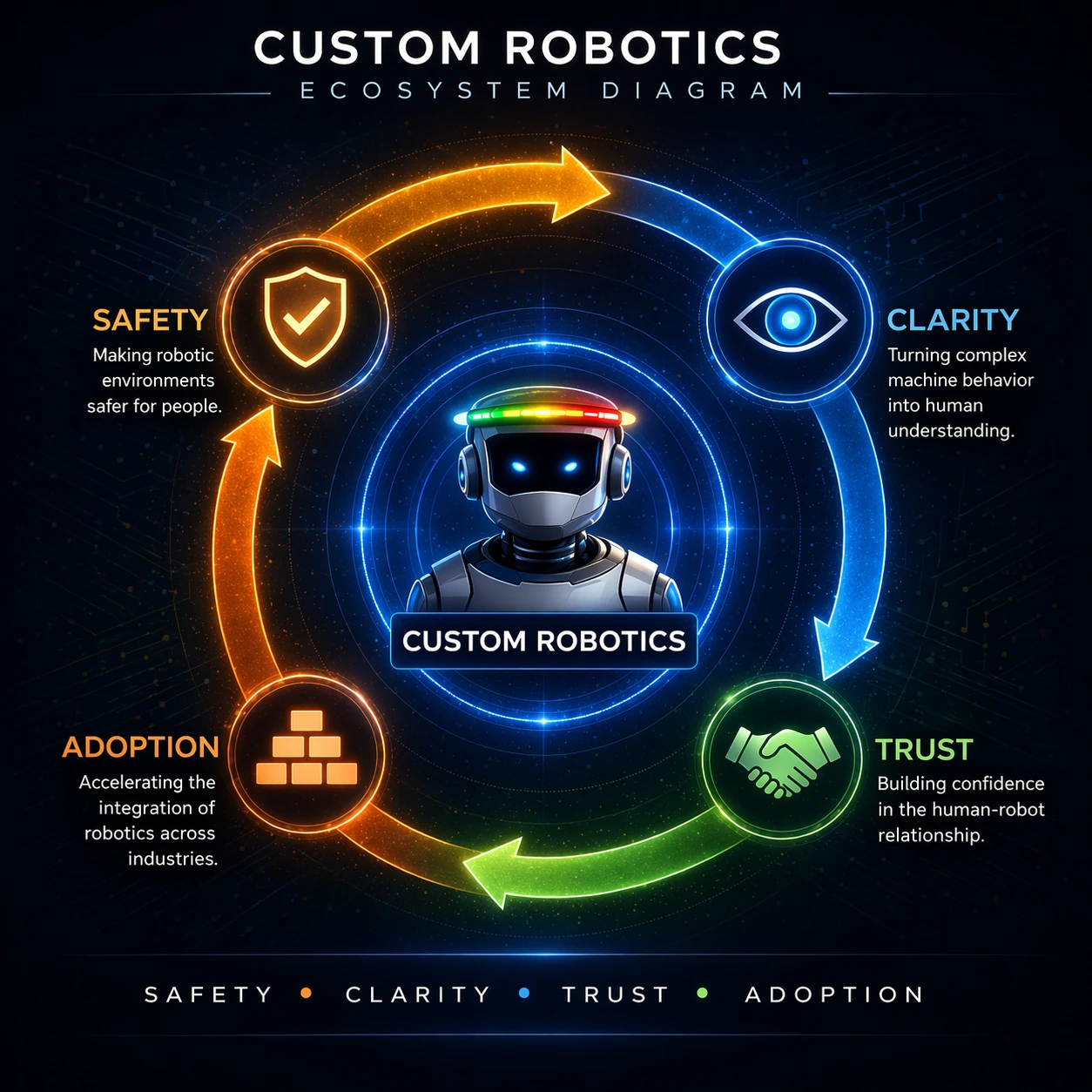
David Skillin is Founder and CEO of Custom Robotics of La Jolla and creator of The Empathy Layer for Robotics™ framework. His work focuses on improving safety, clarity, trust, and adoption in shared human-robot environments.
About Custom Robotics of La Jolla
Custom Robotics of La Jolla (CRLJ) is defining The Empathy Layer for Robotics™—helping humans understand, trust, and safely interact with autonomous systems.