
Using Humanity to Foster Robotics™
Robotics Doesn't Just Need More Intelligence. It Needs More Trust.
Robots are moving beyond controlled environments and into workplaces, hospitals, public infrastructure, government facilities, and other spaces occupied by people.
Custom Robotics of La Jolla is building the independent trust layer connecting Human Understanding, Security & Data Protection, and Independent Third-Party Validation — helping make autonomous systems understandable, accountable and ready for trusted human deployment.
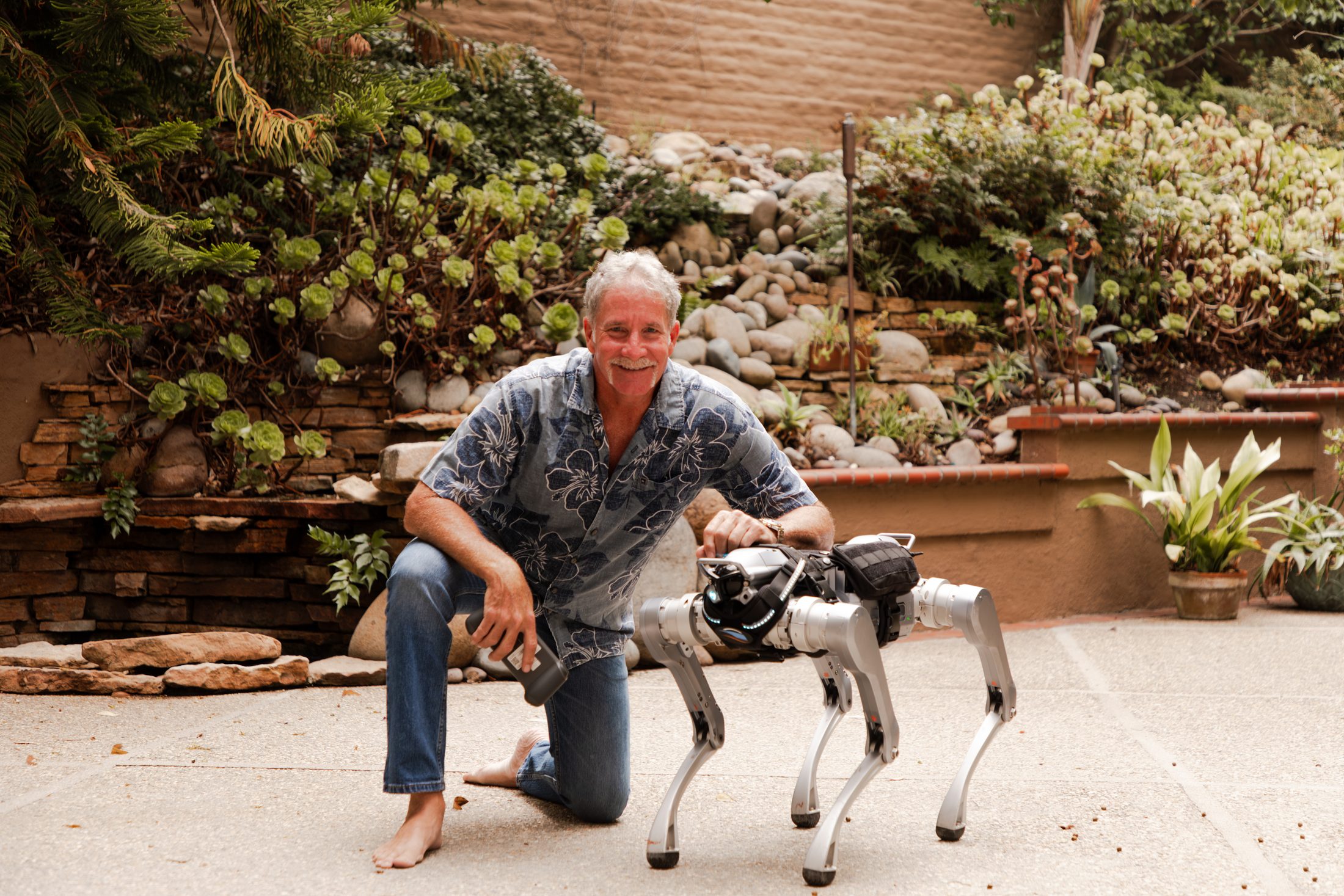
Robots Are Already Here.
Robotics is no longer confined to fenced-off manufacturing cells. Autonomous systems are increasingly operating in warehouses, healthcare environments, workplaces, public infrastructure, and other shared spaces. These systems can see, hear, sense, map, collect, store, and transmit information about the people and environments around them.
As robotics becomes more capable and connected, physical performance alone is no longer enough to establish trust.
- 01Industrial
- 02Logistics
- 03Healthcare
- 04Government
- 05Public Spaces
- 06Home
Understandable on the Outside. Accountable on the Inside.
A robot's internal awareness is not the same as external communication — and physical safety is not the same as data accountability.
People need to know:
- What is it doing?
- Where is it going?
- What will it do next?
- Is it safe to interact?
- Robot Sensors
- Local Processing
- Network
- Storage & Access
Organizations need to know:
- What does it see, hear and sense?
- What information does it collect?
- Where is that information stored or transmitted?
- Who can access it?
- Has its security been independently evaluated?
Cars Already Learned How to Speak to People.
You do not need to understand a car's engine or onboard computer to understand its signals. Robots need an equally clear way to communicate with people.
A robot may know what it's doing. The person standing next to it still needs to know.
A Robot Can Be Physically Safe and Still Create a Security Risk.
Connected robots do not simply move. They can potentially observe and interact with sensitive environments and information.
For government, defense, critical infrastructure, and enterprise organizations, robotics security becomes more than an IT concern. It can become a deployment, data-protection, supply-chain, and operational trust issue.
- 01Robot SensorsCameras, audio, LiDAR, and environmental sensing
- 02Local ProcessingOn-device interpretation of captured information
- 03NetworkTransmission paths in and out of the deployment
- 04Storage & AccessWhere information rests and who can reach it
The robot may know where it's going. You deserve to know where your data is going.
Security Cannot Depend on a Manufacturer Grading Its Own Work.
Manufacturers can make security claims. Independent validation provides evidence.
CRLJ is developing an independent layer between manufacturer claims and trusted deployment — bringing Human Understanding, Security & Data Protection, and Independent Third-Party Validation together within a single robotics trust framework.
- 01Manufacturer ClaimWhat the platform states about itself
- 02CRLJ Independent EvaluationDefined requirements applied consistently
- 03EvidenceDocumented results rather than assertions
- 04Trusted DeploymentConfidence to operate around people
From Understanding to Trusted Adoption
Each stage builds on the one before it. Human understanding without accountability is incomplete — and accountability without understanding is invisible to the people nearby.
- 01
Human Understanding
Robot status and intent made readable to people nearby.
- 02
Security & Data Protection
Visibility into what is sensed, stored, and transmitted.
- 03
Independent Third-Party Validation
Defined claims evaluated against documented evidence.
- 04
CRLJ Assured™
A recognizable designation for what has been evaluated.
- 05
Trust
Confidence that the system is understandable and accountable.
- 06
Adoption
Autonomous systems accepted in shared environments.
Safety → Clarity → Trust → Adoption
Safety
Defined safeguards, human-awareness systems, and responsible operating conditions.
Clarity
Human-readable signals communicate robot status, behavior, and intent.
Trust
Confidence that autonomous systems are understandable, secure, and transparent — with critical claims independently evaluated.
Adoption
The confidence organizations, workers, and consumers need to accept robotics in shared environments.
One Mission. A Growing Trust Platform.
CRLJ is building a connected platform rather than isolated products. Current focus and developing capabilities are labeled honestly.
Skollar™
Current focusHuman-readable robotic communication and operational visibility.
Security & Data Protection
DevelopingGreater visibility into how autonomous systems handle sensitive information.
Independent Validation
DevelopingTurning critical manufacturer claims into independently evaluated evidence.
CRLJ Assured™
DevelopingA recognizable trust designation for autonomous systems evaluated against defined CRLJ requirements.
Trust the Robot. Trust the Data. Verify Both.
The next era of robotics will not be defined by intelligence alone. It will be defined by whether people understand autonomous systems, organizations trust how sensitive information is handled, and critical claims can be independently verified.