
The Robot Understands Its Environment. The Environment Still Needs to Understand the Robot.
Autonomous systems can process enormous amounts of information about their surroundings while the people around them may have very little insight into what the robot is doing, what it intends to do next or how they should respond.
CRLJ is building The Empathy Layer for Robotics™ to help close that understanding gap.
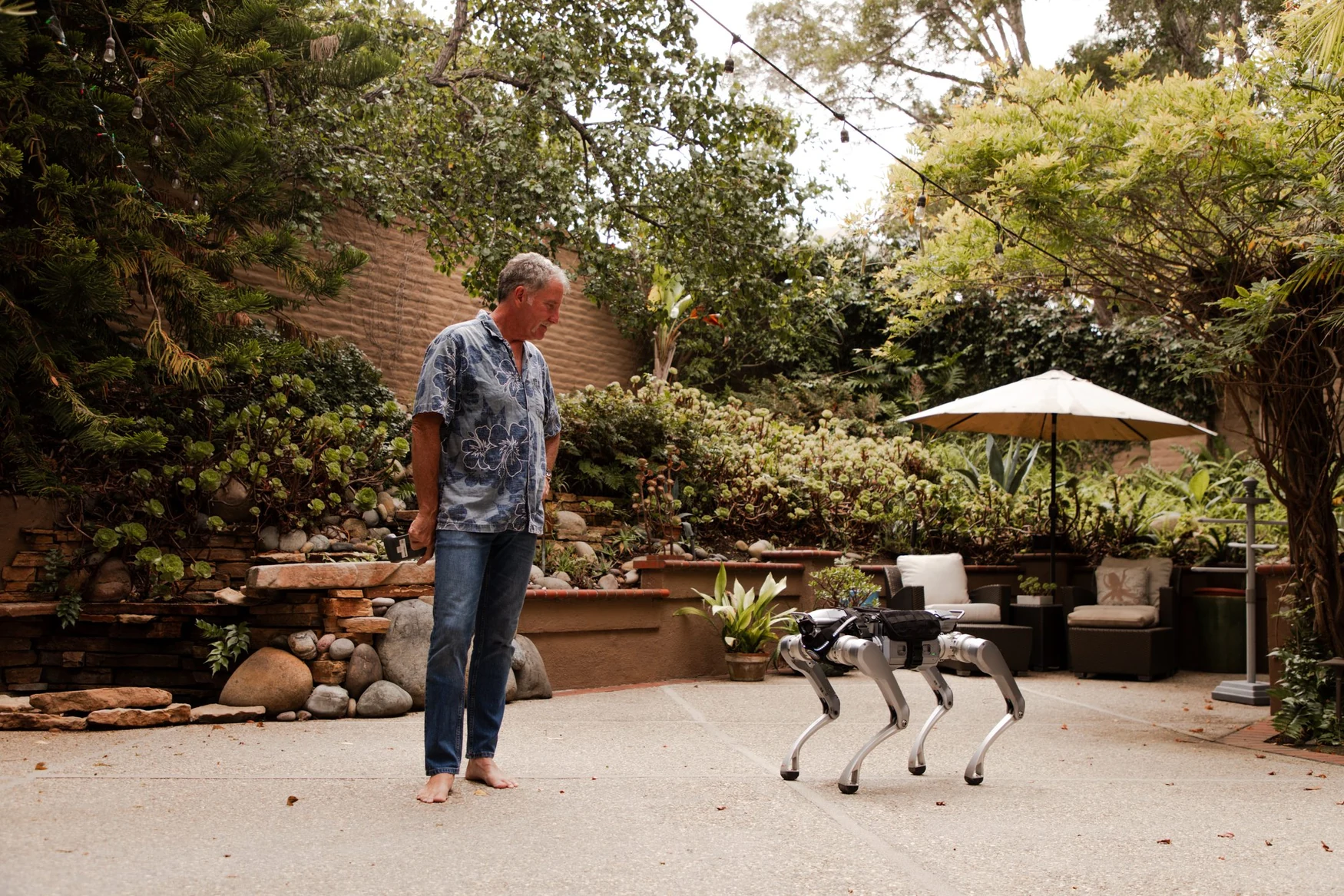
People Ask Simple Questions Around Autonomous Systems.
These are not engineering questions. They are the questions a person naturally asks when a robot is moving near them, their colleagues, or their space.
- Does it see me?
- Is it stopping?
- Will it turn?
- What is it doing?
- What will it do next?
A robot can understand its own state without the people around it understanding that state.
Technical intelligence alone does not solve the human communication problem. A platform can perceive its environment, plan a path, and execute a task while remaining opaque to the people it is moving among.
The Missing Layer Between Robot Intelligence and Human Understanding.
The Empathy Layer for Robotics™ is not designed to make the robot more intelligent. Its purpose is to make selected robot state and intent easier for people to interpret.
- Robot IntelligenceAutonomy, perception, control
- The Empathy LayerMachine state translated into human signal
- Human UnderstandingInterpreted at the point of interaction
- TrustConfidence to work alongside the system
The First Physical Expression of The Empathy Layer for Robotics™.
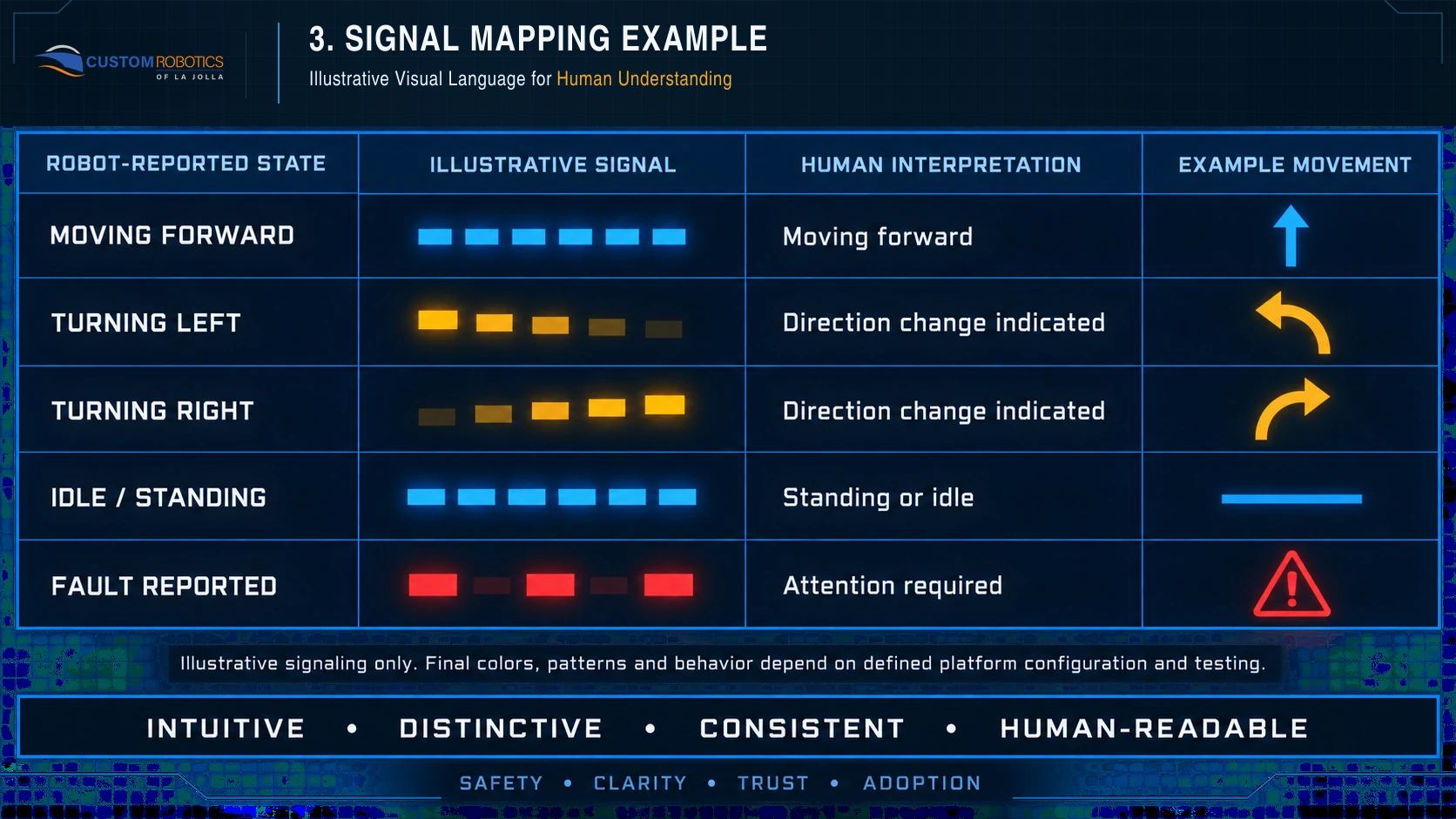
Skollar™ is being developed to translate selected robot states and intent into intuitive, human-readable visual signals — presented on the robot itself, at the point of interaction.
People do not need to understand the internal mechanics of a car to recognize a brake light or turn signal. CRLJ is exploring the same principle for autonomous systems.
- 01Idle / StandingPowered and holding position
- 02Forward MovementTraveling along its path
- 03TurningDirection change indicated ahead of the move
- 04ReversingBacking along its path
- 05Fault / InstabilityCondition requiring human attention
Human Understanding Is Necessary — But Not the Entire Trust Proposition.
A person may understand what a robot is doing physically while an organization still needs to understand what that robot is doing with its data. Understanding is where the trust architecture starts; it is not where it ends.
- 01Understanding
- 02Security
- 03Independent Third-Party Validation
- 04CRLJ Assured™
- 05Trust
- 06Adoption
Safety → Clarity → Trust → Adoption
Human Understanding is expressed primarily through Safety and Clarity — the conditions that let people interpret a robot's behavior without training. Together they contribute to Trust and, ultimately, Adoption.
Safety
Current focusDefined safeguards and responsible operating conditions, supported by clearer communication of what the robot is about to do.
Clarity
Current focusHuman-readable communication of status, behavior, and intent at the point of interaction, rather than internal system state.
Trust
DevelopingSystems that are understandable to the people around them — the outcome of safety and clarity working together.
Adoption
DevelopingConfidence to accept robotics into shared human environments, built on repeatable understanding rather than training.
Human Understanding, Skollar™ and The Empathy Layer for Robotics™ are in development. Nothing on this page should be read as a claim that Skollar™ guarantees understanding, prevents accidents, or ensures safety.
Understanding Is the First Layer, Not the Last.
Each connected area takes the trust architecture further — from the person beside the robot, to the organization deploying it, to the independent evidence behind its claims.
Robots Don't Need to Be Smarter to Be Understood. They Need a Better Way to Communicate.
Human Understanding is the foundation of The Empathy Layer for Robotics™ — connecting Skollar™ to the broader trust architecture that makes shared-environment deployment possible.