
Robots Don't Need More AI—They Need Better Communication
Why the Next Breakthrough in Robotics May Have Nothing to Do with Artificial Intelligence
Custom Robotics of La Jolla argues that the next breakthrough in automation won't come from smarter AI, but from clearer communication—helping humans instantly understand robotic behavior and building the trust required for safe, confident, large‑scale adoption.
David Skillin · June 10, 2026
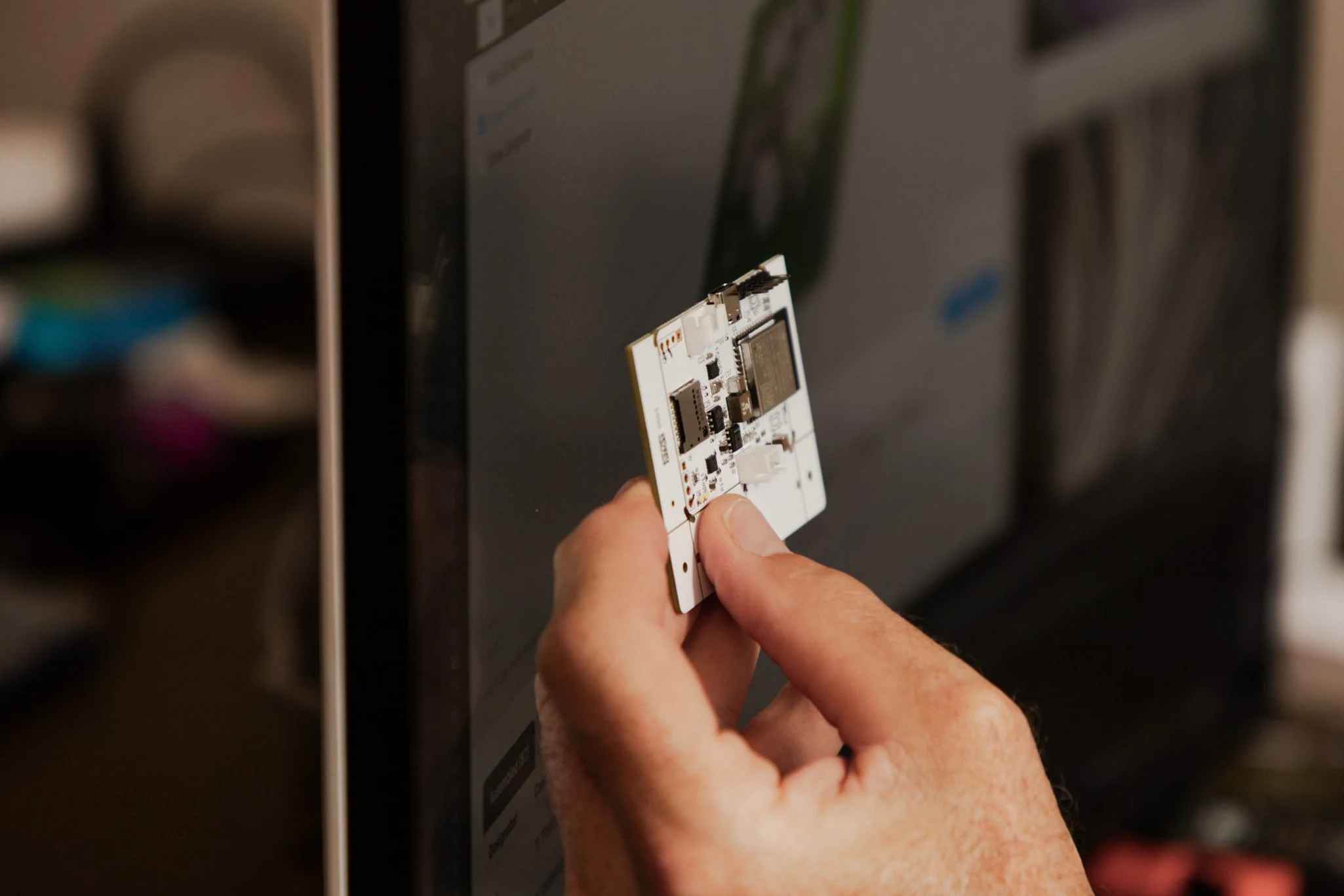
The robotics industry is obsessed with artificial intelligence. Every week brings headlines about larger AI models, more sophisticated machine learning systems, improved computer vision, and increasingly autonomous robots capable of performing tasks that once required human intervention.
While the progress is remarkable, a critical question remains largely unanswered: if robots are becoming so intelligent, why are so many organizations still struggling to deploy them at scale? The answer may have less to do with artificial intelligence and more to do with human understanding.
How We See It
Custom Robotics of La Jolla (CRLJ) believes the robotics industry is focusing heavily on making robots smarter while largely overlooking a different challenge: making robots easier for humans to understand.
"The robotics industry has invested billions making machines more intelligent," explains CRLJ Founder and CEO David Skillin (opens in a new tab). "But the next major opportunity isn't smarter robots—it's creating robots that communicate clearly enough for humans to trust them."
That distinction may ultimately determine which robotics platforms achieve widespread adoption and which remain limited to niche applications.
The Intelligence Race
For the past decade, robotics innovation has largely centered around growing artificial intelligence.
Manufacturers have focused on:
- Artificial Intelligence
- Autonomous Navigation
- Machine Learning
- Computer Vision
- Sensor Fusion
- Predictive Analytics
- Autonomous Decision Making
The results have been impressive. Modern robots can:
- Navigate dynamic environments
- Avoid obstacles
- Optimize routes
- Identify objects
- Perform repetitive tasks
- Analyze large amounts of data
According to the International Federation of Robotics (opens in a new tab) (IFR), robot adoption continues to grow globally as organizations address labor shortages and productivity challenges. But intelligence alone does not guarantee widespread adoption.
The Communication Problem
Imagine standing in a warehouse next to an autonomous mobile robot. You see the robot moving. What happens next?
Will the robot:
- Stop?
- Turn?
- Reverse?
- Yield?
- Continue forward?
- Enter an error state?
The robot itself knows the answer. The human nearby often does not.
This is where robotics encounters a hidden challenge. Machines possess information that humans cannot easily see. That lack of visibility creates uncertainty, and uncertainty creates friction.
The problem is not that robots lack intelligence. The problem is that humans lack awareness of that intelligence.
Humans Need Signals
Human beings rely heavily on visual communication systems. For example, every day we make decisions based on signals.
Drivers rely on:
- Turn signals
- Brake lights
- Traffic lights
- Road signs
Pilots rely on:
- Cockpit alerts
- Warning indicators
- Instrument displays
Healthcare professionals rely on:
- Vital sign monitors
- Status indicators
- Alarm systems
These (and many other) communication systems exist because humans need rapid situational awareness. Without such signals, even highly capable systems become difficult to trust.
The same principle applies to robotics. Yet many robots still communicate very little about their current state, intent, or future actions. As a result, workers are often expected to trust machines they cannot easily interpret.
Why Dashboards Are Not Enough
Many robotics vendors attempt to solve communication challenges through software dashboards.
Dashboards certainly have value. They provide:
- Operational visibility
- Performance metrics
- System diagnostics
- Fleet management capabilities
But dashboards are not where most human-robot interactions occur. People working around robots need immediate understanding in the moment. Warehouse workers do not spend their day staring at dashboards. Factory operators do not constantly monitor software interfaces.
They need answers instantly. Not after opening an application, or reviewing a report, or consulting someone in the control room.
This is why visual communication matters. Humans process visual information far faster than text-based information. In dynamic environments, comprehension must be immediate.
The Missing Layer
At CRLJ, we believe robotics is missing an entire category. We call this category "The Empathy Layer for Robotics™." This layer acts as a bridge between machine intelligence and human understanding. Its purpose is simple: Translate robotic behavior into human-readable communication.
This includes communicating:
- Operational status
- Movement intent
- Safety conditions
- Fault states
- System awareness
The concept is not unlike what graphical user interfaces did for computers. Computers existed before user interfaces. The internet existed before browsers. But adoption accelerated when technology became easier for humans to understand and interact with.
Robotics may be approaching a similar inflection point.
Why This Matters for Adoption
Organizations often assume robotics adoption is primarily a technical challenge. The reality is it's often a human challenge.
The Association for Advancing Automation (opens in a new tab) (A3) regularly highlights workforce concerns, implementation challenges, and operational acceptance as important factors in successful automation initiatives.
Successful deployment requires more than functionality. It requires confidence. Confidence comes from understanding, and understanding comes from communication.
At CRLJ, we describe this progression as:
Safety → Clarity → Trust → Adoption
When humans understand robotic behavior:
- Safety improves
- Clarity increases
- Trust grows
- Adoption accelerates
The reverse is also true. When communication is poor:
- Confusion increases
- Hesitation follows
- Trust declines
- Adoption slows
The Future of Human-Ready Robotics
Artificial intelligence will continue advancing. Robots will become faster, smarter, and more capable. But the next major breakthrough may not be intelligence at all. It may be communication.
The future of robotics depends not only on what machines can do, but on how effectively humans can understand them.
"The future isn't humans versus robots," says Skillin. "It's humans working confidently alongside them."
Creating that future requires more than AI. It requires human-readable systems, transparency, and trust. It also requires a communication layer, such as The Empathy Layer for Robotics™, that helps bridge the gap between machine capability and human understanding. Because ultimately, robots don't need more AI—they need better communication.
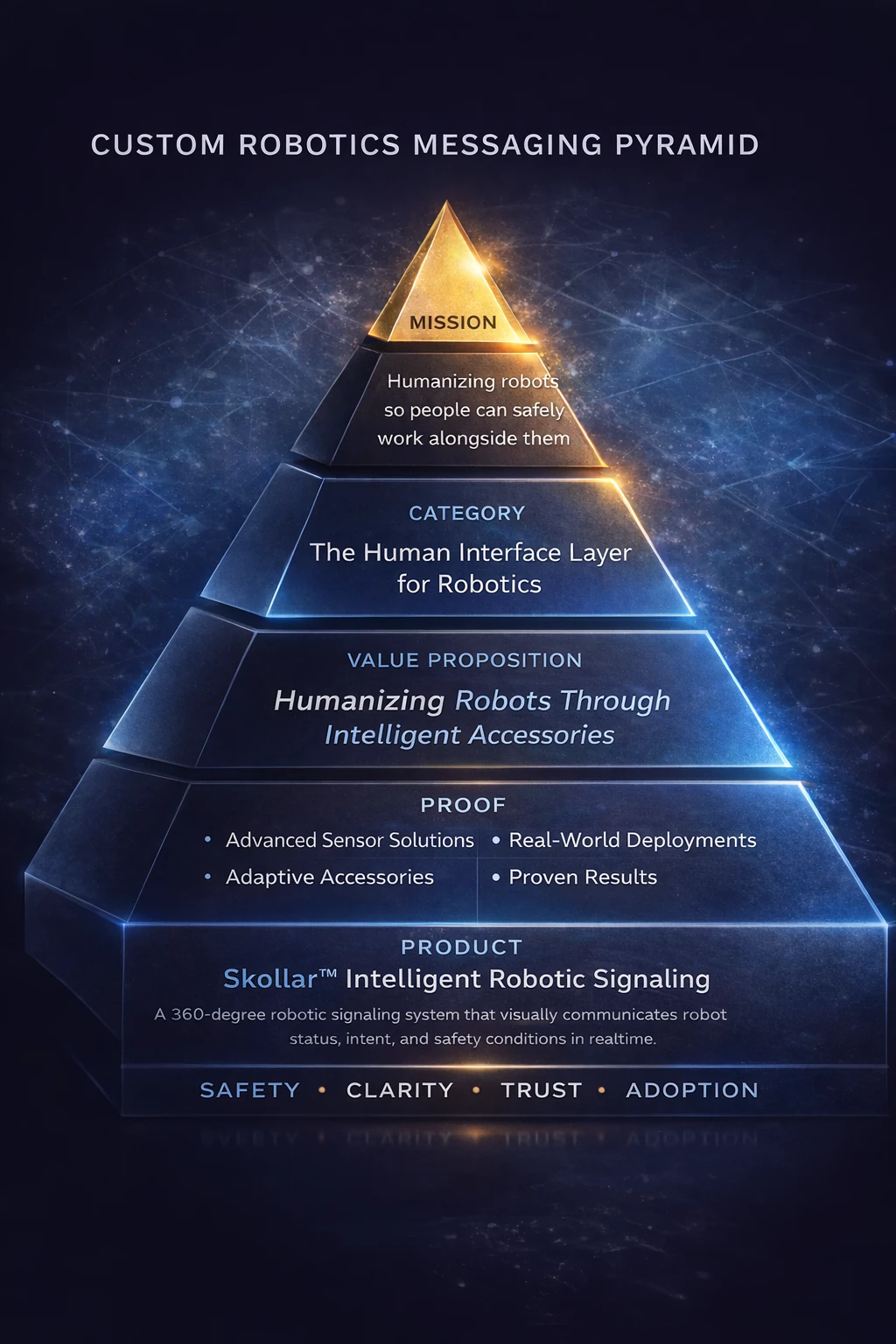
Time to Make Your Robots Human‑Ready
If you're looking to bridge the divide between robot autonomy and human acceptance, contact Custom Robotics of La Jolla at info@customrobotics.io to arrange a free, no‑strings‑attached consult.
About David Skillin
David Skillin is Founder and CEO of Custom Robotics of La Jolla and creator of The Empathy Layer for Robotics™ framework. His work focuses on improving safety, clarity, trust, and adoption in shared human-robot environments.
About Custom Robotics of La Jolla
Custom Robotics of La Jolla (CRLJ) is defining The Empathy Layer for Robotics™—helping humans understand, trust, and safely interact with autonomous systems.