
The Business Case for Human-Ready Robotics
Why Safety, Clarity, and Trust Are Becoming Competitive Advantages
Human-Ready Robotics is becoming a business imperative. Custom Robotics of La Jolla helps organizations reduce uncertainty, strengthen workforce trust, and accelerate adoption by standardizing how autonomous systems communicate intent, awareness, and operational status in shared environments.
David Skillin · September 25, 2026
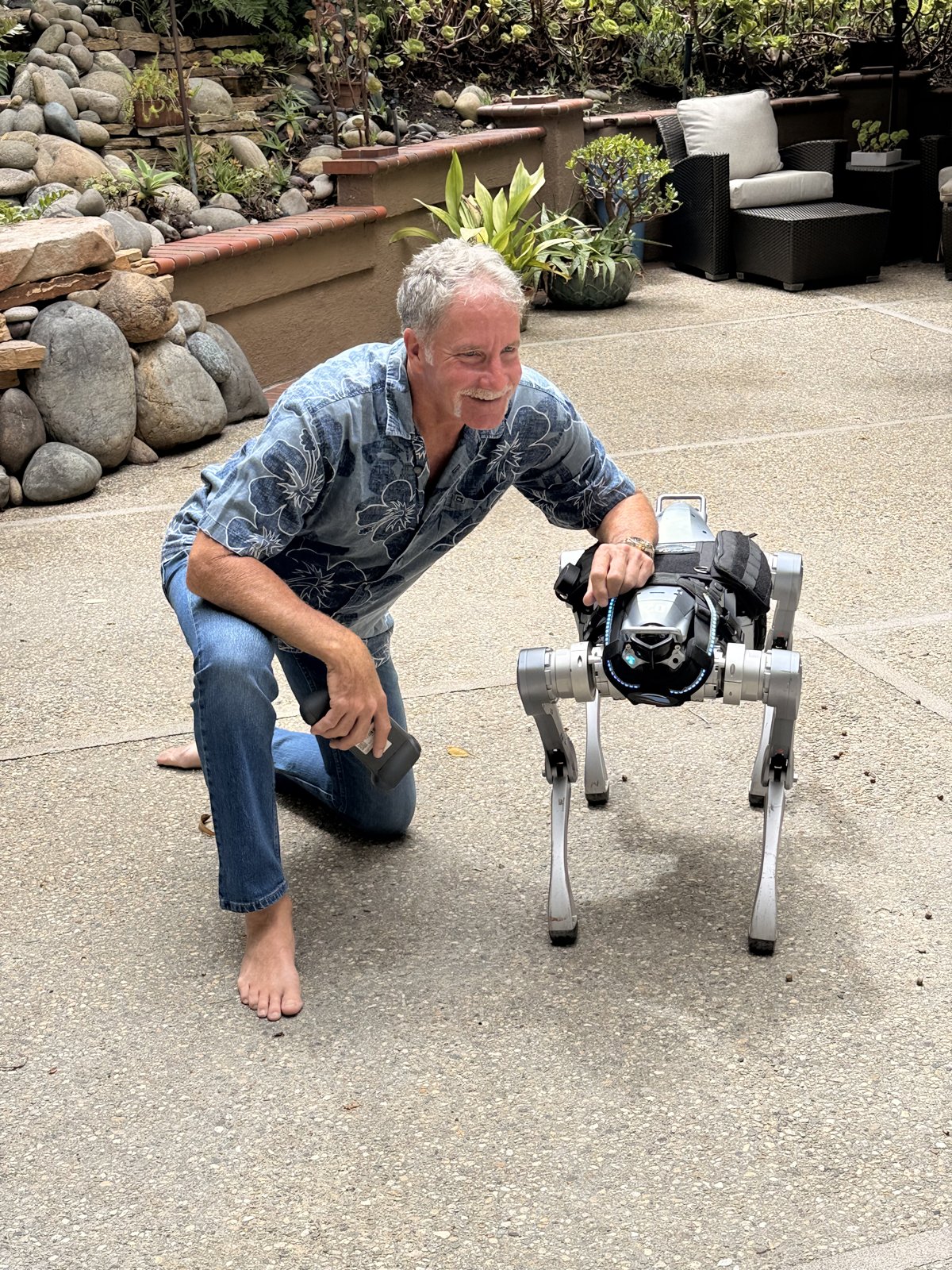
For years, the business case for robotics has been remarkably consistent.
- Increase productivity.
- Reduce labor shortages.
- Improve consistency.
- Lower operating costs.
- Increase throughput.
While these remain compelling reasons to invest in automation, as robots move beyond isolated manufacturing cells and into environments where they work alongside people, a new business variable is emerging: human acceptance.
"The next generation of robotics success will not be determined solely by engineering performance," explains Custom Robotics of La Jolla's CEO & Founder, David Skillin (opens in a new tab), a human-centered robotics strategist and category pioneer. "It will be determined by how effectively organizations build confidence among the people expected to work with these autonomous systems. The strongest return on investment will come from robots that are not only intelligent—but human-ready."
The Hidden Cost of Uncertainty
When organizations evaluate robotics (opens in a new tab) investments, they typically calculate:
- Equipment costs
- Installation expenses
- Labor savings
- Maintenance
- Productivity improvements
- Expected return on investment
These are essential metrics, but they often overlook a significant hidden cost: human uncertainty.
When employees don't fully understand how a robot behaves, organizations frequently encounter:
- Longer training cycles
- Slower adoption
- Increased hesitation
- Operational inefficiencies
- Resistance to change
- Lower workforce confidence
The result is clear: even when technology performs flawlessly, uncertainty erodes trust—and without trust, organizations take longer to realize the full value of their automation investments.
Adoption Determines ROI
Buying a robot is not the same as successfully deploying one. Real return on investment occurs only when robotics become an accepted part of an organization's everyday operations.
Organizations frequently discover that deployment challenges are not technical. They are human.
Employees wonder:
- Is the robot safe?
- Can I work around it?
- What happens if it changes direction?
- Does it recognize me?
- What should I do if something goes wrong?
These concerns influence behavior, and behavior directly impacts confidence and eventual adoption.
Trust Accelerates Deployment
Every major technology follows a similar adoption curve:
- Early adopters embrace innovation.
- The broader market waits for confidence.
Organizations that deploy robotics most successfully often share one characteristic: they invest in trust—not just technology.
Trust reduces:
- Employee resistance
- Safety concerns
- Operational hesitation
- Deployment delays
- Change management challenges
Trust becomes a business asset.
Human-Ready Robotics Creates Organizational Confidence
Human-Ready Robotics extends beyond machine capability. It focuses on the complete human experience.
A Human-Ready robot communicates:
- What it is doing
- What it intends to do
- Whether it recognizes nearby people
- How it is accessing, processing, and storing data
- Whether it is operating normally
- Whether any hazards exist
Such standardized communication reduces uncertainty, which builds confidence—and confidence accelerates organizational acceptance.
Why Communication Has Financial Value
Communication is often viewed as a safety feature. In reality, it also creates measurable business value.
Clear communication can contribute to:
- Faster employee onboarding
- Reduced training time
- Improved operational efficiency
- Greater workforce acceptance
- Higher utilization rates
- Smoother organizational change
These outcomes influence the speed at which organizations achieve return on investment. Applied to robotics, the sooner employees trust autonomous systems, the sooner those systems deliver their intended business value.
Risk Management Is Good Business
Every organization manages risk. Leaders evaluate:
- Operational risk
- Financial risk
- Regulatory risk
- Reputation risk
- Workplace safety
Robotics introduces a new category—human interaction risk—not because robots are unsafe, but because misunderstanding and misinterpretation create uncertainty. When communication improves, ambiguity decreases. And when ambiguity decreases, perceived risk drops. Lower perceived risk often accelerates executive approval and increases organizational support.
The Empathy Layer for Robotics™
Custom Robotics believes Human-Ready Robotics begins with The Empathy Layer for Robotics™, a bridge between machine intelligence and human understanding.
Rather than expecting employees to interpret complex robotic behavior, the empathy layer allows robots to communicate clearly through intuitive, standardized signals.
Every robot should communicate:
- Intent
- Operational state
- Awareness of nearby humans
- Data collection, processing, and storage statuses
- Hazard or fault conditions
This communication creates confidence before questions arise, transforming autonomous machines into understandable coworkers.
Introducing Skollar™
Skollar™ is the first physical implementation of The Empathy Layer for Robotics™, giving robots a persistent, human-readable signaling interface that works independently of dashboards or cloud connectivity. It provides a simple, intuitive, and physical way for people to understand machine behavior in real time.
Built on decentralized edge processing, the Skollar™ architecture maintains low-latency response, deterministic state logic, offline-safe operation, and redundant signaling. Because all interpretation happens locally, the system continues functioning during communications disruptions, relay interruptions, network degradation, or temporary telemetry loss.
Its human-centered signaling model converts machine states—standby, forward movement, turning, reversing, docking, low power, faults, or emergency conditions—into clear visual patterns that can be interpreted in under two seconds.
Competitive Advantage Beyond Technology
Eventually, many current so-called advanced robotic capabilities will become expected rather than exceptional.
- Artificial intelligence will continue improving.
- Navigation systems will become smarter.
- Sensors will become more sophisticated.
As a result, competitive advantage will increasingly shift toward customer experience.
Organizations evaluating robotics vendors may begin asking:
- How easily will our employees accept this system?
- How quickly can we deploy it?
- How much training will it require?
- How confident will our workforce feel?
- How effectively does it communicate?
The companies with the strongest answers will gain a meaningful edge. This is where neutral, third-party validation becomes essential—providing independent proof that a robot communicates clearly, behaves predictably, and is ready for human-centered deployment.
CRLJ Assured™
Guided by the four pillars of Safety, Clarity, Trust, and Adoption, Custom Robotics has pioneered CRLJ Assured™—an independent validation mark organizations can rely on to confirm that a robot meets defined standards (opens in a new tab) for communication, transparency, responsible data practices, monitoring, and human ready operation in diverse environments.
CRLJ Assured™ provides third-party validation of how a robot communicates, behaves, and manages the information it relies on, offering evidence-based assurance that goes beyond manufacturer claims and strengthens public trust.
Such validation is more than a feel-good, marketing ploy; it is sound business strategy.
Looking Ahead
The next decade of robotics will not simply be about building more capable machines. It will be about building organizations that are confident deploying them.
"Companies that focus exclusively on artificial intelligence may build impressive technology," says Skillin. "But companies that also invest in human understanding will build lasting competitive advantage."
The true value of robotics isn't measured when a robot is purchased, it's measured when people trust it enough to make it part of everyday work.
Frequently Asked Questions
1. What is The Empathy Layer for Robotics™?
The Empathy Layer for Robotics™ is a human-centric communication framework developed by Dave Skillin and Custom Robotics of La Jolla that translates a robot's internal status, data-handling and security posture, and intent into clear, intuitive signals people can understand instantly.
2. How does Human-Ready Robotics improve workforce adoption?
Human-Ready Robotics reduces uncertainty by giving employees clear, intuitive insight into a robot's intent, awareness, and operational status. When people understand what a robot is doing—and why—they adopt new systems faster and with greater confidence.
3. Why is standardized robot communication becoming a business priority?
As robots enter shared environments, inconsistent signals slow training and increase hesitation. Standardized communication creates predictability across platforms, helping organizations deploy systems more quickly and reducing the cognitive load placed on employees.
4. How does clearer communication reduce operational risk?
Ambiguity increases perceived risk, especially in environments where humans and robots interact closely. Clear communication lowers uncertainty, strengthens safety perception, and helps leaders accelerate approvals, deployment timelines, and workforce acceptance.
5. What is Skollar™?
Skollar™ is Custom Robotics' first physical implementation of The Empathy Layer for Robotics™, giving robots a human-readable signaling interface that works without dashboards or cloud access. This hardware's decentralized edge architecture ensures low-latency, offline-safe, redundant operation even during connectivity loss. Skollar™ turns machine states into intuitive visual cues people can interpret in under two seconds.
6. What is CRLJ Assured™ and how does it improve human-robot interaction?
CRLJ Assured™ is Custom Robotics' developing independent assurance framework, intended to verify that a robot handles data responsibly, communicates intent clearly, and operates safely. It is designed to offer third-party confirmation that the system is understandable and predictable.
7. Why is third-party validation important for robotics procurement?
Independent validation gives organizations evidence-based assurance that a robot behaves predictably, communicates clearly, and manages data responsibly. This external confirmation strengthens trust, reduces deployment friction, and supports more confident purchasing decisions.
Time to Make Your Robots Human-Ready
If you're looking to bridge the divide between robot autonomy and human acceptance, contact Custom Robotics of La Jolla at info@customrobotics.io to arrange a free, no-strings-attached consultation.
About David Skillin
David Skillin is Founder and CEO of Custom Robotics of La Jolla and creator of The Empathy Layer for Robotics™ framework. His work focuses on improving safety, clarity, trust, and adoption in shared human-robot environments.
About Custom Robotics of La Jolla
Custom Robotics of La Jolla (CRLJ) is defining The Empathy Layer for Robotics™—helping humans understand, trust, and safely interact with autonomous systems.