
The Four Universal Signals Every Robot Should Communicate
Building a Common Language Between Humans and Autonomous Machines
Every successful technology eventually develops a universal language that people instinctively understand. Custom Robotics of La Jolla's Dave Skillin believes robotics has reached that moment, proposing four universal signals that every autonomous robot should communicate to improve safety, clarity, trust, and adoption.
David Skillin · August 20, 2026
Imagine driving on a busy freeway where every vehicle has different brake lights, different turn signals, and different warning indicators—or none at all.
Confusion would reign. Safety would be unheard of. Trust would disappear.
While this scenario seems unimaginable to modern drivers, it mirrors the reality of today's robotics industry.
As autonomous systems become increasingly common in shared human environments, there is still no universal standard for how robots communicate their intentions and status to the people around them. Every manufacturer approaches human-machine communication differently, if they address it at all.
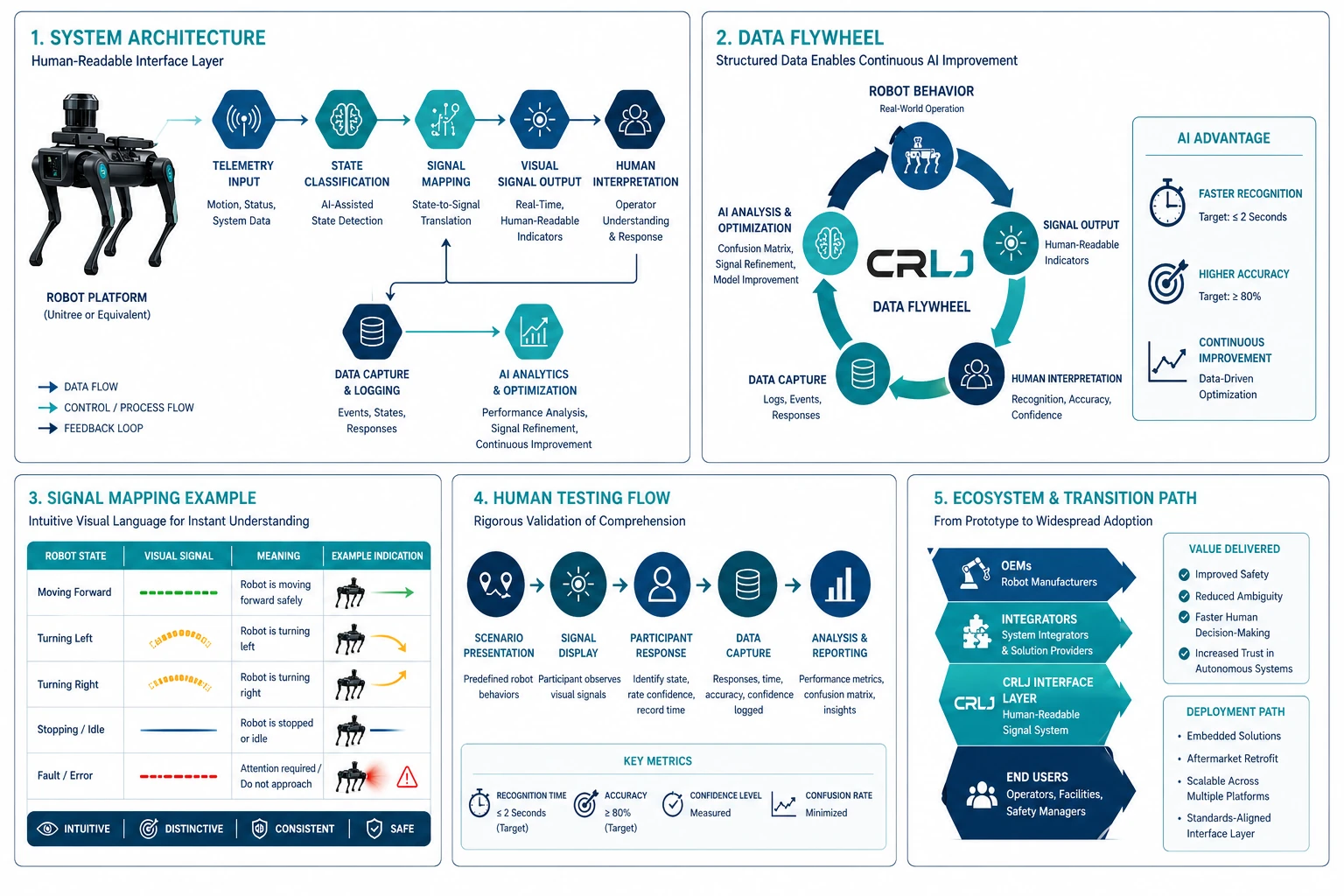
"At Custom Robotics, we believe widespread robotics (opens in a new tab) adoption requires a standardized, human-readable, intuitive communication framework," explains David Skillin, a human-centered robotics strategist, category pioneer, and founder of Custom Robotics of La Jolla (CRLJ). "Just as every automobile communicates using universally recognized signals, every robot should communicate a common set of signals that people nearby can understand and trust instantly—without specialized training, dashboards, or technical expertise. We call this The Empathy Layer for Robotics™, a new category in robotics designed to transform robot intent into human understanding."
The Communication Gap
Robots today are constantly processing rich streams of data:
- Position: Where they are in space
- Intent: Where they plan to move next
- Health: How well systems are functioning
- Energy: How much power remains
- Priorities: Which tasks take precedence
- Faults: What's going wrong, if anything
- Context: What's happening around them
- External Inputs: Information from connected servers, cloud services, or other platforms that influence how robots interact with their environment and what they do next
To a robot, the picture is clear. It may be communicating various statuses and progress to a dashboard or central processor, but to anyone working in its proximity, that information is mostly hidden.
People encountering such an autonomous robot are left to wonder:
- What is it doing right now?
- What data is it accessing and what is it doing with it?
- What is it about to do next?
- Where is it going?
- Does it notice me?
- Does it need anything from me?
- Is it safe to be near it?
That information gap between what the robot "knows" about its own status and what nearby humans do not know breeds uncertainty—and this gap is one of the main challenges to widespread robotics (opens in a new tab) adoption.
How Technologies Become Understandable
Every technology that becomes part of daily life eventually develops shared, recognizable signals—ways of showing status and intent that people trust and can react to quickly. Automobiles, elevators, transit systems, and emergency services all rely on standardized cues that allow people to make rapid decisions without hesitation.
These conventions emerged because people needed clarity, not guesswork. Robotics has reached the same inflection point.
The Four Universal Signals
As autonomous robots become everyday coworkers and companions, they need ways to communicate what they know and what they're about to do so that humans can interpret those signals intuitively. Such cues are not merely aesthetic or "nice to have," they are an essential bridge between robotic intelligence and human trust.
At Custom Robotics, we believe every autonomous robot should communicate four essential categories of information—not as software features, but as human communication requirements.
1. Intent
People should immediately understand what the robot plans to do next.
- Move forward
- Turn left
- Turn right
- Reverse
- Stop
- Dock
Communicating clear intent reduces surprise and builds confidence.
2. Operational Status
Humans should immediately know whether the robot is functioning normally.
- Normal operation
- Idling
- Charging
- Paused
- Acquiring and/or Processing data
- Storing data
- Offline
- Maintenance mode
Operational status information reassures people that the system is stable and predictable.
3. Awareness
One of the most important questions people ask is, "Does the robot know I'm here?"
Robots should communicate whether they have:
- Detected nearby people
- Recognized obstacles in the vicinity
- Acknowledged their environment
- Adjusted behavior accordingly
Awareness is critical because people often judge safety based on whether they believe a machine recognizes their presence. Communicating this awareness removes uncertainty.
4. Hazard or Fault
When something is wrong, people should know immediately.
Examples include:
- Fault condition
- Emergency stop
- Navigation error
- Sensor failure
- System instability
- Restricted operation
- Offline
Just as warning lights on a vehicle immediately capture attention, robotic fault states should be impossible to misunderstand. Clarity during abnormal conditions is often more important than communication during normal operation.
Beyond Dashboards
Many robotics companies focus heavily on software dashboards, which are valuable for supervisors and fleet managers.
They provide:
- Diagnostics
- Fleet visibility
- Reporting
- Analytics
- Event Logs
But dashboards are not designed for the workers who share space with moving robots. Busy warehouse employees aren't able to constantly monitor software. Healthcare professionals can't stop what they are doing to review dashboards. Airport personnel need to make decisions in seconds.
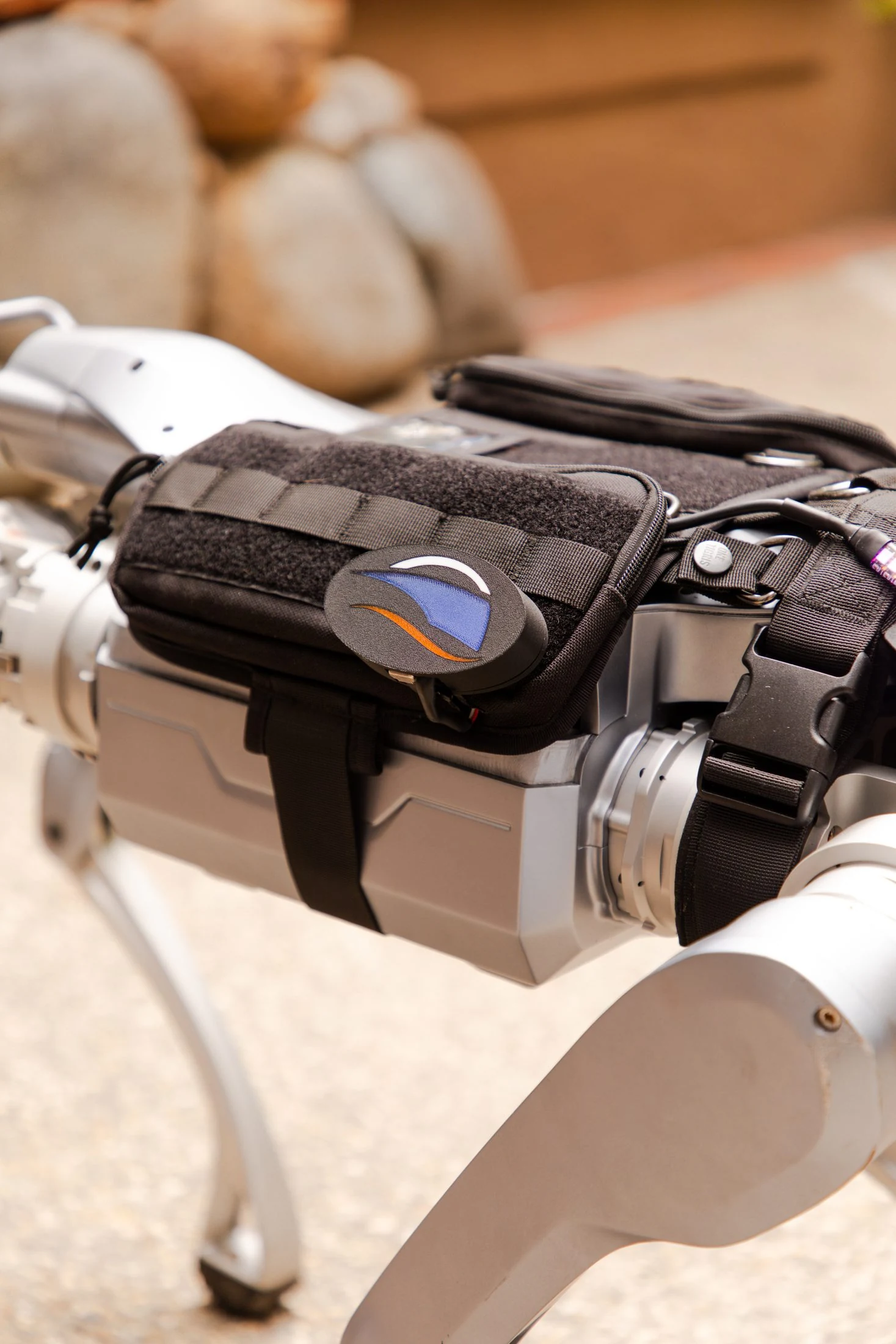
The Empathy Layer for Robotics™ communicates directly at the point of interaction.
A Universal Language for Robotics
Custom Robotics defines The Empathy Layer for Robotics™ as the bridge between machine intelligence and human understanding. Its purpose is to translate robotic behavior into intuitive, universally understandable communication—so people can instantly interpret any robot, in any environment, regardless of manufacturer.
Imagine walking into any warehouse, hospital, airport, or manufacturing facility and immediately understanding every robot regardless of manufacturer.
- Just as every driver understands a brake light.
- Just as every nurse understands a patient monitor.
- Just as every pilot understands warning indicators.
Standardized communication creates:
- Faster learning
- Better safety
- Greater confidence
- Improved workforce acceptance
- Easier deployment
Most importantly, it creates trust.
Security, Transparency, and Independent Validation
As connected robots become more autonomous, communication alone is not enough. People also need to trust how robots handle information, manage data flows, behave, and operate within sensitive environments.
Security & Data Handling
People must know what a robot sees, collects, accesses, and transmits—and that its data practices are responsible and secure.
Clear Movement & Intent Communication
Robots must communicate their next action and operational state in ways humans instantly understand.
Independent Third‑Party Validation
Manufacturers cannot be the sole authority on trust. Third-party experts must confirm how robots behave, communicate, and manage sensitive information.
These elements build the evidence‑based trust organizations need before deploying robots in shared environments, which is why Custom Robotics is developing CRLJ Assured™, a framework intended to independently validate these practices.
CRLJ Assured™
CRLJ Assured™, currently in development, is intended to independently review and validate a robotics system's behavior, data practices, and status‑ and movement‑intent communication capabilities—with the goal of giving people confidence they can work safely and comfortably alongside them.
Looking Ahead: How Custom Robotics Sees It
The robotics industry is entering a defining moment—one where human‑robot interaction must become as intuitive and universal as the signals we rely on in other parts of everyday life. By standardizing how robots express intent, status, awareness, and hazards—and by ensuring those systems handle data responsibly and are independently validated—The Empathy Layer for Robotics™ is designed to meet that moment.
As adoption accelerates across industries, the path forward is clear: robots must communicate in ways humans already know how to interpret. When that happens, robots stop being mysterious and start becoming trusted partners.
Robots don't need to become more human. They simply need to become more understandable. When people instantly grasp what a robot is doing and why, trust follows—and trust is what unlocks the future of robotics.
Frequently Asked Questions
1. Why do robots need standardized communication signals?
Humans make rapid decisions based on clear, familiar cues. Without consistent signals, people must guess what a robot is doing or planning to do, which slows adoption, reduces trust, and increases safety concerns in human-robot environments.
2. What makes The Empathy Layer for Robotics™ different from traditional dashboards?
The Empathy Layer for Robotics™ is not a dashboard. Dashboards are designed for supervisors, managers, and analysts—not for the people walking and working beside robots. The Empathy Layer is a device that communicates directly in the environment in real-time, giving workers immediate, intuitive insight into robot behavior without screens, apps, or technical interpretation.
3. Do the Four Universal Signals replace existing robot interfaces?
No. They represent a new category of interface that translates internal machine data into human‑readable cues. Fleet managers, supervisors, and analysts still use dashboards; frontline workers get real‑time clarity where it matters most.
4. How will standard signals improve safety?
When people know a robot's intent, status, awareness, and fault conditions, they can respond confidently and appropriately—preventing confusion, uncertainty, and hesitation.
5. Can these signals work across different robot manufacturers?
Yes. The Empathy Layer for Robotics™ is designed as a universal framework. Just as brake lights work on every car, The Empathy Layer can be applied across brands, robot types, and environments to create consistent, industry‑wide understanding.
6. What is CRLJ Assured™ and how does it improve human‑robot interaction?
CRLJ Assured™ is Custom Robotics' developing independent assurance framework, intended to verify that a robot handles data responsibly, communicates intent clearly, and operates safely. It is designed to offer third‑party confirmation that the system is understandable and predictable.
Time to Make Your Robots Human‑Ready
If you're looking to bridge the divide between robot autonomy and human acceptance, contact Custom Robotics of La Jolla at info@customrobotics.io to arrange a free, no‑strings‑attached consultation.
About David Skillin
David Skillin is Founder and CEO of Custom Robotics of La Jolla and creator of The Empathy Layer for Robotics™ framework. His work focuses on improving safety, clarity, trust, and adoption in shared human-robot environments.
About Custom Robotics of La Jolla
Custom Robotics of La Jolla (CRLJ) is defining The Empathy Layer for Robotics™—helping humans understand, trust, and safely interact with autonomous systems.