
The Empathy Layer for Robotics™ Will Become as Standard as the Seat Belt
Why the Future of Robotics Depends on a Universal Standard for Human Understanding
Custom Robotics of La Jolla believes that robotics is approaching a seat-belt moment—where universal communication standards become essential for safety, clarity, and trust. The Empathy Layer for Robotics™ and CRLJ Assured™ aim to make robots truly human-ready.
David Skillin · September 25, 2026
There was a time when automobiles had no seat belts, no brake lights, no turn signals, and no standardized safety features. With every manufacturer approaching safety differently, as cars became faster and more common, society reached an important realization: innovation alone wasn't enough—drivers needed common standards that made every vehicle safer and more predictable.
Today, we rarely think about these standards. They're just part of everyday life the world over:
- Drivers instinctively understands brake lights.
- Passengers expects seat belts.
- Intersection rely on the same kinds of traffic signals.
These systems have become so universal that we simply assume they'll be there.
Custom Robotics of La Jolla believes the robotics industry (opens in a new tab) is approaching a similar moment in its evolution.
"As autonomous systems rapidly become part of everyday life, the robotics industry will require a universal communication framework that helps people understand, trust, and safely interact with robots," explains Custom Robotics of La Jolla's CEO & Founder, David Skillin (opens in a new tab), a human-centered robotics strategist and category pioneer. "We call that framework the Empathy Layer for Robotics™."
Every Industry Reaches a Standardization Point
History shows a predictable pattern: innovation comes first, followed by standardization.
The automobile industry eventually standardized:
- Seat belts
- Brake lights
- Turn signals
- Dashboard warning indicators
- Traffic signs
- Safety testing
Railroads standardized:
- Timetables
- Track gauges
- Signaling systems
- Safety protocols
- Freight classifications
- Station operations
Telecommunications standardized:
- Switching systems
- Dialing conventions
- Network protocols
- Emergency call routing
- Device interoperability
- Spectrum allocation
These standards did not slow innovation. By creating common expectations, they increased public confidence and allowed entire industries to grow.
Robotics is heading toward the same kind of inflection point.
Robots Are Leaving Controlled Environments
For decades, robots operated behind safety fences. Interaction with people was limited and carefully controlled.
Today, robots are moving into shared environments, working in:
- Warehouses
- Manufacturing facilities
- Hospitals
- Airports
- Hotels
- Retail stores
- Restaurants
- Office buildings
- Schools
- Homes
The question is no longer, "Can robots operate autonomously?"
The question becomes, "Can people confidently operate alongside robots?"
That answer depends on communication.
Every Robot Needs to Speak the Same Language
Imagine if every automobile manufacturer designed different traffic signals: one uses blue to signal a stop, another uses purple, and yet another flashes random colors. Driving would become confusing and dangerous almost instantly.
Instead of chaos, we rely on a universal language.
Everyone understands:
- Stop.
- Go.
- Slow down.
- Turn.
- Hazard.
Robotics currently lacks this consistency. Different robots communicate in different ways. Some use lights while others use sounds. Many communicate little or nothing at all.
As robotic deployments increase, this inconsistency becomes more than an inconvenience. It becomes a barrier to trust—and lack of trust is a barrier to widespread adoption of human-ready robotics.
Trust Is Built Through Predictability
When communication is predictable, people respond confidently, but when communication is inconsistent, people hesitate.
This principle applies everywhere.
- Drivers trust brake lights because every vehicle uses them.
- Pilots trust cockpit alerts because every aircraft follows common conventions.
- Doctors trust patient monitors because critical information is displayed consistently.
Robotics deserves the same predictability. People should immediately recognize what a robot is doing regardless of who manufactured it.
The Empathy Layer for Robotics™
Custom Robotics believes predictable communication begins with The Empathy Layer for Robotics™—a platform-agnostic communication framework that translates robotic behavior, operational state, and intent into instantly understandable human-readable signals. Its sole purpose is to improve human understanding of robot behavior, intentions, and status: Transforming Robot Intent into Human Understanding™.
The Empathy Layer for Robotics™ answers questions people instinctively ask whenever they encounter autonomous systems:
- What is happening?
- What happens next?
- Does the robot recognize me?
- Is everything operating normally?
- Is it safe?
The answers should never depend on the robot's manufacturer. They should be universal.
Introducing Skollar™
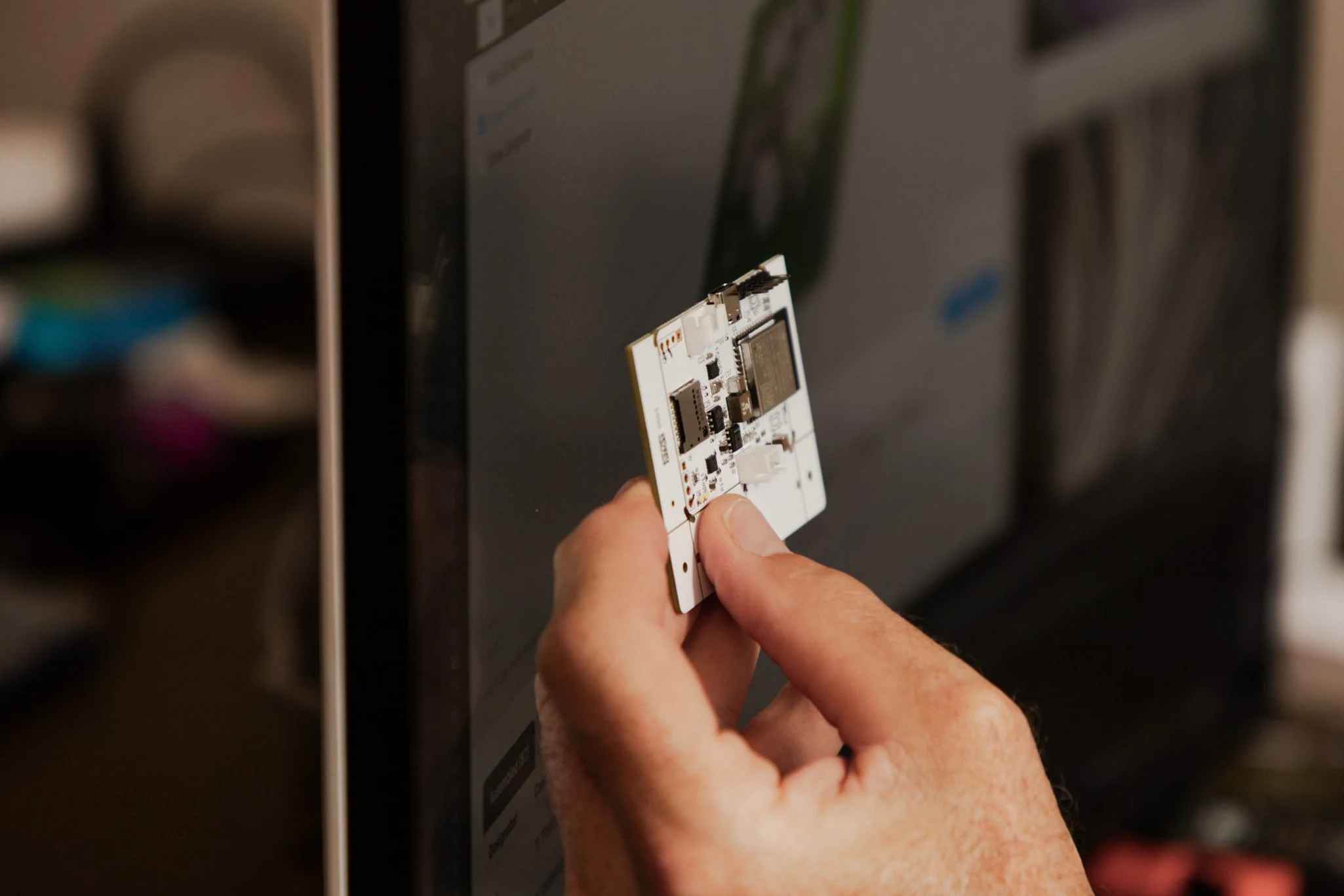
Skollar™ is the first physical implementation of The Empathy Layer for Robotics™, giving robots a persistent, human-readable signaling interface that works independently of dashboards or cloud connectivity. It provides a simple, intuitive, and physical way for people to understand machine behavior in real time.
Built on decentralized edge processing, the Skollar™ architecture maintains low-latency response, deterministic state logic, offline-safe operation, and redundant signaling. Because all interpretation happens locally, the system continues functioning during communications disruptions, relay interruptions, network degradation, or temporary telemetry loss.
Its human-centered signaling model converts machine states—standby, forward movement, turning, reversing, docking, low power, faults, or emergency conditions—into clear visual patterns that can be interpreted in under two seconds.
Standardization Doesn't Limit Innovation
Some worry that standards reduce creativity. History suggests the opposite.
- Seat belts did not prevent automakers from building better vehicles.
- The USB standard did not stop computer innovation.
- Wi-Fi did not slow the growth of wireless technology.
Instead, standards removed unnecessary complexity while allowing companies to compete where it mattered most.
The same opportunity exists in robotics.
Manufacturers should compete by delivering better AI, mobility, autonomy, sensors, and overall performance—not by inventing entirely different ways to tell people what their robots are doing. Communication should become shared infrastructure.
The Next Generation of Consumer Expectations
Today's consumers already expect technology to communicate clearly.
- When an elevator is moving, we see indicators.
- When a smartwatch battery is low, we're notified.
- When a vehicle detects a hazard, it alerts the driver.
As robots become commonplace, people will develop similar expectations.
They will assume robots communicate:
- Their direction.
- Their operational state.
- What data they are accessing, processing and storing.
- Their awareness of nearby people.
- Their safety condition.
Organizations deploying robots will increasingly demand these capabilities. Eventually, regulators, insurers, and industry organizations will as well.
CRLJ Assured™
Guided by the four pillars of Safety, Clarity, Trust, and Adoption, Custom Robotics has pioneered CRLJ Assured™—an independent validation mark organizations can rely on to confirm that a robot meets defined standards (opens in a new tab) for communication, transparency, responsible data practices, monitoring, and human ready operation in diverse environments.
CRLJ Assured™ provides third-party validation of how a robot communicates, behaves, and manages the information it relies on, offering evidence-based assurance that goes beyond manufacturer claims and strengthens public trust.
Such validation is more than a feel-good, marketing ploy; it is sound business strategy.
Looking Ahead: The Opportunity to Lead
Every emerging industry eventually produces organizations that define its standards, not because they built the most products but because they established the frameworks everyone else adopted.
Custom Robotics believes The Empathy Layer for Robotics™ and CRLJ Assured™ represent that opportunity for robotics.
A common communication standard and independent validation mark would benefit:
- Manufacturers
- Integrators
- Employers
- Regulators
- Insurance providers
- Workers
- Consumers
Most importantly, it would benefit the public by making robots easier to understand and easier to trust.
Frequently Asked Questions
1. What is The Empathy Layer for Robotics™?
The Empathy Layer for Robotics™ is a platform-agnostic communication framework that translates robotic behavior, operational state, and intent into instantly understandable human-readable signals, helping people understand a robot's intent, status, and awareness. It creates predictable, universal signals that make robots safer and easier to trust.
2. Why does the robotics industry need a universal communication standard?
As robots enter shared human environments, inconsistent communication creates confusion and hesitation. A universal standard ensures every robot expresses critical information in ways people immediately recognize.
3. How does The Empathy Layer for Robotics™ improve human-robot interaction?
The Empathy Layer for Robotics™ translates robotic behavior into intuitive human-readable signals. It helps people understand what robots are doing, what happens next, and whether conditions are safe—all without specialized training.
4. What is Skollar™?
Skollar™ is Custom Robotics' first physical implementation of The Empathy Layer for Robotics™, giving robots a human-readable signaling interface that works without dashboards or cloud access. This hardware's decentralized edge architecture ensures low-latency, offline-safe, redundant operation even during connectivity loss. Skollar™ turns machine states into intuitive visual cues people can interpret in under two seconds.
5. What makes CRLJ Assured™ valuable for organizations deploying robots?
CRLJ Assured™ provides independent validation of a robot's communication clarity, data practices, and human-ready operation. This third-party assurance strengthens trust and reduces deployment risk across diverse environments.
6. Will standardization limit innovation in robotics?
History shows that standards accelerate innovation by removing unnecessary complexity and creating shared expectations. With communication standardized, manufacturers can focus on advancing AI, mobility, autonomy, sensors, and performance.
7. Why is predictable communication essential for public trust in robotics?
People trust technologies that behave consistently and communicate clearly, especially in safety-critical environments. Predictable robot communication reduces uncertainty and becomes a key factor in widespread adoption of human-ready robotics.
Time to Make Your Robots Human-Ready
If you're looking to bridge the divide between robot autonomy and human acceptance, contact Custom Robotics of La Jolla at info@customrobotics.io to arrange a free, no-strings-attached consultation.
About David Skillin
David Skillin is Founder and CEO of Custom Robotics of La Jolla and creator of The Empathy Layer for Robotics™ framework. His work focuses on improving safety, clarity, trust, and adoption in shared human-robot environments.
About Custom Robotics of La Jolla
Custom Robotics of La Jolla (CRLJ) is defining The Empathy Layer for Robotics™—helping humans understand, trust, and safely interact with autonomous systems.