
What Brake Lights, Traffic Signals, and Medical Monitors Teach Us About Robotics
The World's Best Safety Systems All Have One Thing in Common: They Communicate
Custom Robotics of La Jolla is redefining how humans understand autonomous systems by standardizing robotic communication. Through The Empathy Layer for Robotics™, they help people interpret intent, status, and awareness instantly—turning uncertainty into confidence.
David Skillin · September 25, 2026
Imagine driving along the freeway and suddenly every brake light disappears. The brakes still work—the vehicles themselves function perfectly—and drivers still know where they're going. But without brake-light signals, every driver behind the lead car is forced to guess.
Now imagine a hospital where patient monitors no longer display heart rates, oxygen levels, or sound alarms. Patients may be stable, and the medical equipment may be functioning exactly as designed, but doctors and nurses lose the information they rely on to make informed decisions.
In both scenarios, the problem isn't intelligence. The problem is a lack of standardized communication, which leads to hesitation and indecision.
According to Custom Robotics of La Jolla's CEO & Founder, David Skillin (opens in a new tab), a human-centered robotics strategist and category pioneer, "Robotics finds itself at an inflection point. Robots are becoming increasingly intelligent, but they lack a universal way of communicating their intention and status to the people around them. This is something we are actively solving at Custom Robotics, because without standardized communication, even the smartest robots create uncertainty in those around them."
Technology Alone Doesn't Create Safety
Automobiles are incredibly sophisticated machines. Modern vehicles process thousands of calculations every second. They manage engine performance, braking systems, steering, traction control, collision avoidance, and dozens of other complex functions.
Yet one of the most important safety features on every vehicle is remarkably simple:
A simple red light that tells everyone behind you that you're slowing down.
Brake lights don't improve the car's intelligence. They improve everyone else's understanding, and that distinction matters: safety isn't created only by what a machine knows—it's created when everyone around the machine understands what it's doing.
Traffic Signals Changed the Way Humans Move
Early automobiles shared roads without standardized communication. As traffic increased, confusion increased with it.
The solution wasn't to build better cars—it was to create a universal signaling system:
- Red means stop.
- Green means go.
- Yellow means caution.
Now imagine a less extreme but equally disruptive twist on our previous brake-light example. Traffic lights (opens in a new tab) still operate, but instead they begin flashing random colors—orange, blue, purple. At best, drivers hesitate, unsure what the cars around them intend to do. At worst, the roads devolve into dangerous free-for-alls—not because the infrastructure failed, but because standardized communication vanished.
Today, traffic signals are understood almost instinctively around the world. Drivers don't pause to interpret them. They simply respond.
Robotics (opens in a new tab) has not yet reached that level of standardization. Every manufacturer communicates differently:
- Some robots flash lights.
- Others display screens.
- Some produce sounds.
- Many communicate almost nothing at all.
As robots become more common, this inconsistency is becoming a meaningful challenge—and a growing concern.
Humans Need Visible Signals
One of the biggest misconceptions in robotics is that people simply need more training. While training certainly helps, humans also depend on signals.
People naturally want to know:
- What is happening?
- What will happen next?
- Is everything operating normally?
- Does the robot recognize me?
- Should I change my behavior?
These questions aren't technical. They're human. The answers should never require opening a dashboard or reading a user manual. They should be immediately obvious.
Communication Reduces Cognitive Load
Every environment where robots operate is already busy.
- Warehouse associates monitor inventory.
- Healthcare professionals care for patients.
- Airport staff manage travelers.
- Manufacturing workers oversee production.
No one has the mental bandwidth to constantly interpret unfamiliar robotic behavior.
The best communication systems reduce cognitive effort:
- Drivers don't analyze brake lights.
- Nurses don't decode heart monitors.
- Pilots don't interpret warning lights from scratch every flight.
The meaning is immediate. Robotics should work the same way.
The Empathy Layer for Robotics™
Custom Robotics believes robotics requires its own equivalent of brake lights, traffic signals, and patient monitors. We call this The Empathy Layer for Robotics™.
It's not another software platform, nor is it another AI model. It's a communication layer that translates robotic intelligence and behavior into human understanding.
Its purpose is simple: to help people understand what robots are doing before uncertainty becomes hesitation.
Through intuitive, standardized communication, robots should clearly express:
- Intent
- Operational state
- Awareness of nearby humans
- Data collection, processing, and storage statuses
- Hazard or fault conditions
Such signaling allows people working alongside robots to make faster, safer, and more confident decisions.
Introducing Skollar™
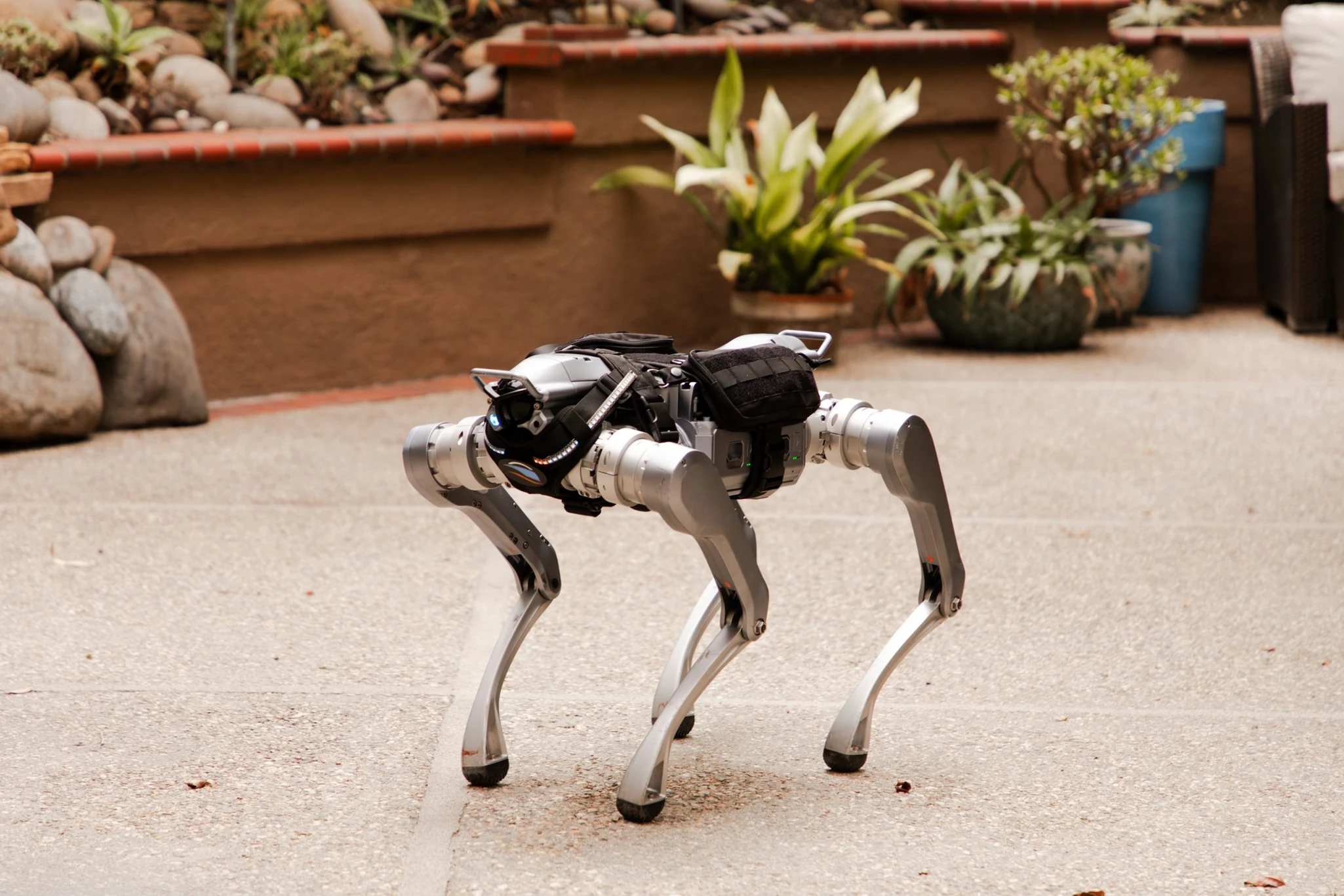
Skollar™ is the first physical implementation of The Empathy Layer for Robotics™, giving robots a clear, human-readable signaling interface that works without dashboards or cloud access. Its decentralized edge architecture delivers low-latency response, deterministic logic, offline-safe operation, and redundant signaling that stays active during cloud connectivity or network disruptions.
Skollar™ translates machine states into intuitive visual cues—movement, docking, low power, faults, emergencies—designed for rapid human interpretation (within two seconds) and improved situational awareness.
Standardization Accelerates Adoption
History shows that industries mature when communication becomes standardized.
- Automobiles became safer because every manufacturer adopted recognizable signals.
- Healthcare improved because patient information became standardized.
- Aviation became one of the safest industries in the world because communication became universal.
As robots become commonplace in everyday environments, people will expect consistent communication regardless of manufacturer. Organizations that embrace this principle early will help define the industry's future.
From Intelligence to Understanding
Artificial intelligence answers two important questions: "What should the robot do?" and "How should the robot complete this task?"
The Empathy Layer for Robotics™ answers, "How do people know what the robot is doing right now?" and "What will the robot do next?"
Successful robotics deployment requires answers to these and other questions along a progression we call the four pillars of Safety → Clarity → Trust → Adoption.
Safety—People must first feel protected and safe.
Clarity—Robots must communicate clearly and consistently.
Trust—Understanding builds confidence.
Adoption—Confidence enables organizations to deploy robotics at scale.
Standardized communication is what connects every step.
There's More: Growing Trust
As robots become more autonomous, they must not only communicate their next action and operational state clearly to humans, but also earn trust in how they handle information, manage data flows, and operate within sensitive environments.
Security & Data Handling—People want to know what a robot sees, collects, accesses, and transmits, and that its data practices are responsible and secure.
Independent Third-Party Validation—Neutral, third-party experts must confirm how robots behave, communicate, and manage sensitive information.
CRLJ Assured™
Custom Robotics is developing CRLJ Assured™, a framework intended to independently review and validate a robotics system's behavior, data practices, and status- and movement-intent communication. The framework is designed to give people confidence that they can work safely and comfortably alongside autonomous robots in any environment where they operate.
Looking Ahead: How Custom Robotics Sees It
The robotics industry often speaks about artificial intelligence, autonomy, and machine learning as the way forward. While those technologies are certainly transforming what's possible, history suggests that the technologies people remember most are not necessarily the smartest—they are the ones people understand.
The Empathy Layer for Robotics™ has the potential to transform robotics in exactly the same way because the future of robotics will not be defined solely by what machines can do—it will be defined by how clearly they communicate with the people they are designed to serve.
Frequently Asked Questions
1. What is The Empathy Layer for Robotics™?
The Empathy Layer for Robotics™ is a human-centric communication framework developed by Dave Skillin and Custom Robotics of La Jolla that translates a robot's internal status, data-handling and security posture, and intent into clear, intuitive signals people can understand instantly.
2. Why does standardized communication matter in robotics?
Standardized communication reduces hesitation and uncertainty by giving people clear, consistent signals about what a robot is doing now and what it will do next, similar to brake lights, traffic signals, and medical monitors.
3. How does The Empathy Layer for Robotics™ improve safety?
It improves safety by making robotic behavior immediately understandable—expressing intent, operational status, human awareness, and hazard conditions in ways people can interpret without dashboards or training.
4. What problem does inconsistent robot communication create?
Inconsistent communication forces people to guess how different robots behave, increasing cognitive load and reducing confidence in shared environments like warehouses, hospitals, airports, and manufacturing floors.
5. What is Skollar™?
Skollar™ is Custom Robotics' first physical implementation of The Empathy Layer for Robotics™, giving robots a human-readable signaling interface that works without dashboards or cloud access. This hardware's decentralized edge architecture ensures low-latency, offline-safe, redundant operation even during connectivity loss. Skollar™ turns machine states into intuitive visual cues people can interpret in under two seconds.
6. How does clear communication accelerate robotics adoption?
Clear communication builds clarity and trust, which reduces hesitation and enables organizations to deploy autonomous systems at scale—following the proven progression of Safety → Clarity → Trust → Adoption.
7. What is CRLJ Assured™ and how does it improve human-robot interaction?
CRLJ Assured™ is Custom Robotics' developing independent assurance framework, intended to verify that a robot handles data responsibly, communicates intent clearly, and operates safely. It is designed to offer third-party confirmation that the system is understandable and predictable.
Time to Make Your Robots Human-Ready
If you're looking to bridge the divide between robot autonomy and human acceptance, contact Custom Robotics of La Jolla at info@customrobotics.io to arrange a free, no-strings-attached consultation.
About David Skillin
David Skillin is Founder and CEO of Custom Robotics of La Jolla and creator of The Empathy Layer for Robotics™ framework. His work focuses on improving safety, clarity, trust, and adoption in shared human-robot environments.
About Custom Robotics of La Jolla
Custom Robotics of La Jolla (CRLJ) is defining The Empathy Layer for Robotics™—helping humans understand, trust, and safely interact with autonomous systems.