
What the Robotics Industry Can Learn from Aviation
Why the World's Safest Industry May Hold the Blueprint for Human-Ready Robotics
Commercial aviation proved that standardized communication and human centered design dramatically improve safety. Custom Robotics applies these same principles to autonomous systems, creating Human Ready Robotics through clearer signals, stronger trust, and The Empathy Layer for Robotics™.
David Skillin · September 25, 2026
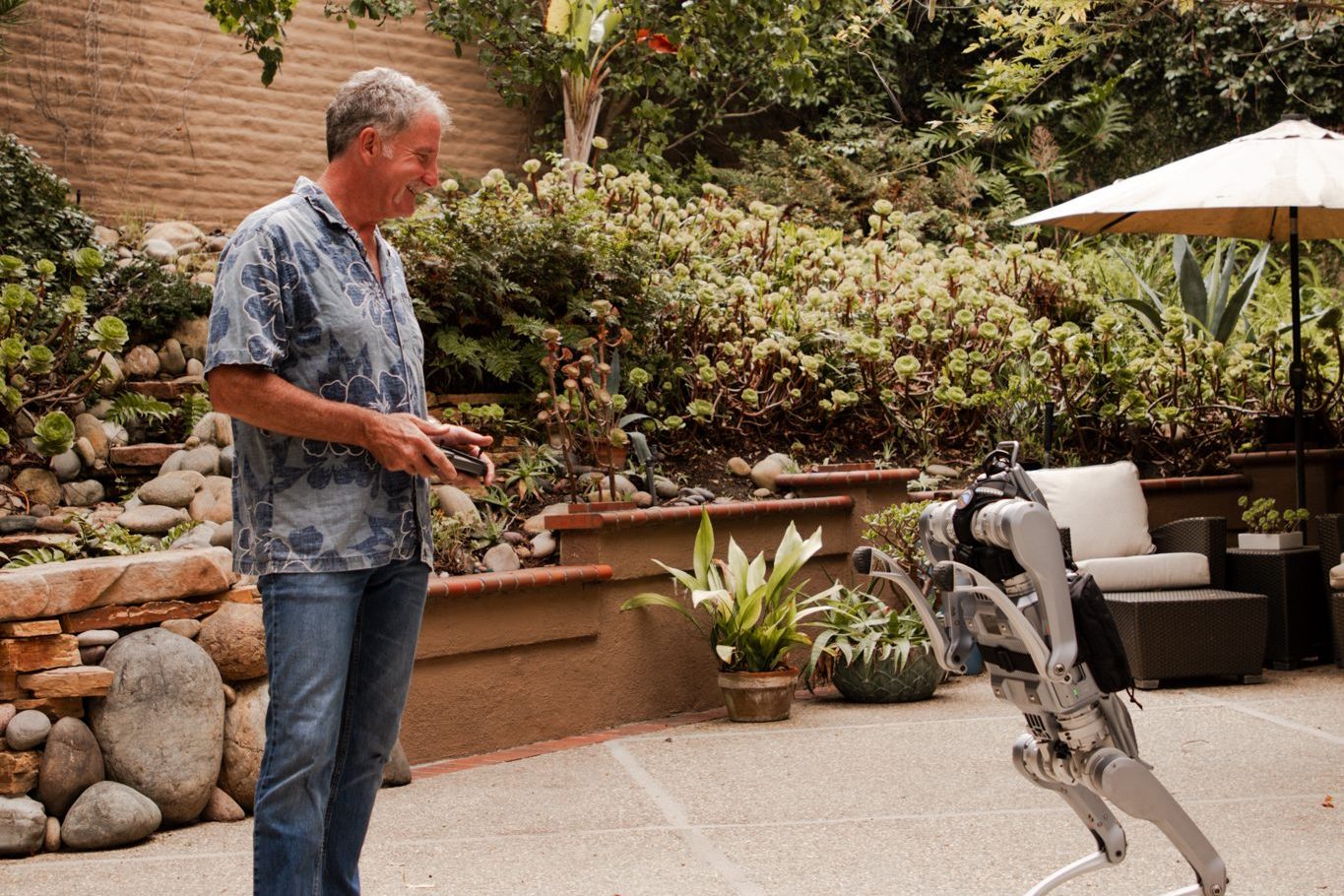
Commercial aviation is one of the safest forms of transportation in history. Every day, more than 100,000 flights safely transport millions of passengers around the world. Pilots, air traffic controllers, maintenance crews, and increasingly sophisticated automation systems work together in an environment where mistakes can have enormous consequences.
This level of safety wasn't achieved simply by building better airplanes. It was achieved by creating better communication.
Custom Robotics of La Jolla (CRLJ) believes the robotics industry has reached a similar turning point.
"As robots become autonomous coworkers in factories, warehouses, hospitals, airports, and public spaces, the next major breakthrough will not come from artificial intelligence alone," explains David Skillin (opens in a new tab), a human-centered robotics strategist, category pioneer, and founder of Custom Robotics. "It will come from establishing a common language between robots and the people around them ... and aviation has already shown us how to do this."
Aviation Didn't Eliminate Human Error—It Designed Around It
Early aviation focused primarily on aircraft performance. As the aviation industry (opens in a new tab) matured, experts realized that accidents were often caused not by mechanical failures, but by communication failures, confusion, and poor situational awareness.
The solution wasn't simply to develop better technology. The solution required better human-centered engineering, so the aviation industry invested heavily in:
- Standardized cockpit alerts
- Consistent warning systems
- Crew Resource Management (CRM)
- Visual indicators
- Audible alarms
- Checklists
- Universal operating procedures
These systems transformed aviation (opens in a new tab) from a technology challenge into a human-focused system. Robotics is now facing the same evolution.
Standard, Universal Alerts
Imagine if every aircraft manufacturer designed completely different warning lights, sounds, and cockpit alerts. Flying would become dramatically more difficult—and far less safe. Instead, aviation relies on standardization.
Pilots learn a universal language that allows them to recognize and respond to critical information immediately, regardless of the aircraft they're flying. This consistency matters as much as the technology itself.
The robotics industry, however, remains fragmented. Currently, each manufacturer develops its own communication methods. Different robots display different colored lights, different sounds, and different status indicators. Sometimes, robots communicate very little at all to the people working around them.
This inconsistency creates uncertainty.
Situational Awareness Saves Lives
One of aviation's greatest contributions to safety is the concept of situational awareness. Surprises create risk—and risk is something you want to avoid when piloting an aircraft.
Pilots are trained to constantly understand:
- What is happening now.
- What will happen next.
- What hazards exist.
- How other aircraft are behaving.
- What actions are expected.
For air crews, awareness reduces surprises, which reduces risk. The same principle applies to robotics.
Workers sharing space with autonomous robotic systems need immediate answers to similar questions:
- What is the robot doing?
- What will it do next?
- Does it recognize me?
- Is everything operating normally?
- Is there a hazard?
Without such awareness, people hesitate. With it, they gain confidence.
Communication Builds Trust
Aviation recognizes an important truth: information reduces anxiety.
- Passengers feel reassured when pilots communicate clearly before turbulence.
- Pilots trust automation because cockpit systems provide continuous feedback.
- Air traffic controllers coordinate safely because everyone follows standardized communication procedures.
Communication is not an accessory. It is a safety system. Robotics needs to adopt this same philosophy.
Autonomous machines should continuously communicate their intent, operational status, and awareness in ways people can immediately understand and respond to if/as necessary.
Human Factors Matter
The aviation industry has invested decades studying how humans think under pressure.
Researchers discovered that people perform best when information is:
- Clear
- Consistent
- Timely
- Easy to interpret
- Standardized
These principles now influence everything from cockpit layouts to emergency procedures.
Similarly, rather than expecting people to learn dozens of different robotic communication systems, robots should communicate in ways that align with natural human expectations. In other words, technology should adapt to people—not the other way around.
The Empathy Layer for Robotics™
Custom Robotics believes robotics needs its own equivalent of aviation's communication standards. We call this The Empathy Layer for Robotics™. It serves as the bridge between machine intelligence and human understanding, translating robotic behavior into intuitive, universally recognizable communication.
"Just as aviation developed standardized alerts and procedures that improved safety across the industry, robotics needs standardized methods for communicating intent, operational status, whether nearby humans have been detected, and hazard conditions," says Skillin. "These signals should be immediately recognizable regardless of robot manufacturer or deployment environment."
Introducing Skollar™
Skollar™ is the first physical implementation of The Empathy Layer for Robotics™, giving robots a persistent, human-readable signaling interface that works independently of dashboards or cloud connectivity. It provides a simple, intuitive, and physical way for people to understand machine behavior in real time.
Built on decentralized edge processing, the Skollar™ architecture maintains low-latency response, deterministic state logic, offline-safe operation, and redundant signaling. Because all interpretation happens locally, the system continues functioning during communications disruptions, relay interruptions, network degradation, or temporary telemetry loss.
Its human-centered signaling model converts machine states—standby, forward movement, turning, reversing, docking, low power, faults, or emergency conditions—into clear visual patterns that can be interpreted in under two seconds.
There's More: Growing Trust
As robots become more autonomous, they must not only communicate their next action and operational state clearly to humans, but also earn trust in how they handle information, manage data flows, and operate within sensitive environments.
Security & Data Handling—People want to know what a robot sees, collects, accesses, and transmits, and that its data practices are responsible and secure.
Independent Third-Party Validation—Neutral, third-party experts must confirm how robots behave, communicate, and manage sensitive information.
CRLJ Assured™
Custom Robotics is developing CRLJ Assured™, a framework intended to independently review and validate a robotics system's behavior, data practices, and status- and movement-intent communication. The framework is designed to give people confidence that they can work safely and comfortably alongside autonomous robots in any environment where they operate.
This is a critical step in people accepting robots as trustworthy systems—and it aligns directly with a broader adoption progression Custom Robotics calls the "Four Pillars."
Four Pillars: Safety → Clarity → Trust → Adoption
Custom Robotics defines the "Four Pillars" of robotics adoption as:
- Safety: People must feel safe around robots.
- Clarity: Robots must communicate in ways humans immediately understand.
- Trust: Clear communication builds confidence.
- Adoption: Confidence enables organizations to deploy robotics at scale.
Every successful technology eventually learns that ease of effective communication accelerates adoption. Like the lessons learned from aviation, robotics will be no different.
Looking Ahead: How Custom Robotics Sees It
History shows that industries mature through standardization.
- Automobiles adopted brake lights and turn signals.
- Healthcare standardized patient monitoring systems.
- Aviation standardized cockpit communication.
Each advancement accelerated public confidence.
Likewise ...
- Artificial intelligence will continue making robots more capable.
- Sensors will become more advanced.
- Navigation will improve.
- Autonomous decision-making will evolve.
Intelligence alone will not define the industry's future. The robotics industry needs the same standardized communication layer—what we call The Empathy Layer for Robotics™—that aligns machine behavior with human understanding.
Frequently Asked Questions
1. What is The Empathy Layer for Robotics™?
The Empathy Layer for Robotics™ is a human-centric communication framework developed by David Skillin and Custom Robotics of La Jolla that translates a robot's internal status, data-handling and security posture, and intent into clear, intuitive signals people can understand instantly.
2. Why does robotics need standardized communication like aviation?
Robotics needs standardized communication because inconsistent signals across manufacturers create uncertainty, while universal cues—like those used in aviation—improve clarity, safety, and human confidence.
3. How does better communication improve human-robot safety?
Clear, consistent communication reduces surprises, increases situational awareness, and helps people understand what a robot is doing and what it will do next.
4. What is Skollar™?
Skollar™ is Custom Robotics' first physical implementation of The Empathy Layer for Robotics™, giving robots a human-readable signaling interface that works without dashboards or cloud access. This hardware's decentralized edge architecture ensures low-latency, offline-safe, redundant operation even during connectivity loss. Skollar™ turns machine states into intuitive visual cues people can interpret in under two seconds.
5. What role does situational awareness play in human-robot interaction?
Situational awareness helps people feel confident around autonomous systems by making a robot's actions, intent, and recognition of nearby humans immediately understandable.
6. Why is independent validation important for robotics adoption?
Independent validation builds trust by confirming how robots behave, communicate, manage sensitive information, and behave in sensitive environments—giving people confidence in shared spaces.
7. What is CRLJ Assured™ and how does it improve human-robot interaction?
CRLJ Assured™ is Custom Robotics' developing independent assurance framework, intended to verify that a robot handles data responsibly, communicates intent clearly, and operates safely. It is designed to offer third-party confirmation that the system is understandable and predictable.
Time to Make Your Robots Human-Ready
If you're looking to bridge the divide between robot autonomy and human acceptance, contact Custom Robotics of La Jolla at info@customrobotics.io to arrange a free, no-strings-attached consultation.
About David Skillin
David Skillin is Founder and CEO of Custom Robotics of La Jolla and creator of The Empathy Layer for Robotics™ framework. His work focuses on improving safety, clarity, trust, and adoption in shared human-robot environments.
About Custom Robotics of La Jolla
Custom Robotics of La Jolla (CRLJ) is defining The Empathy Layer for Robotics™—helping humans understand, trust, and safely interact with autonomous systems.