
Why Every Robot Will Eventually Need an Empathy Layer
The Missing Layer Between Artificial Intelligence and Human Understanding
Custom Robotics of La Jolla and Founder David Skillin set the standard for secure, transparent, and independently validated autonomous systems. Through The Empathy Layer for Robotics™ and CRLJ Assured™, robots become understandable, trustworthy, and ready for responsible deployment in human environments.
David Skillin · August 20, 2026
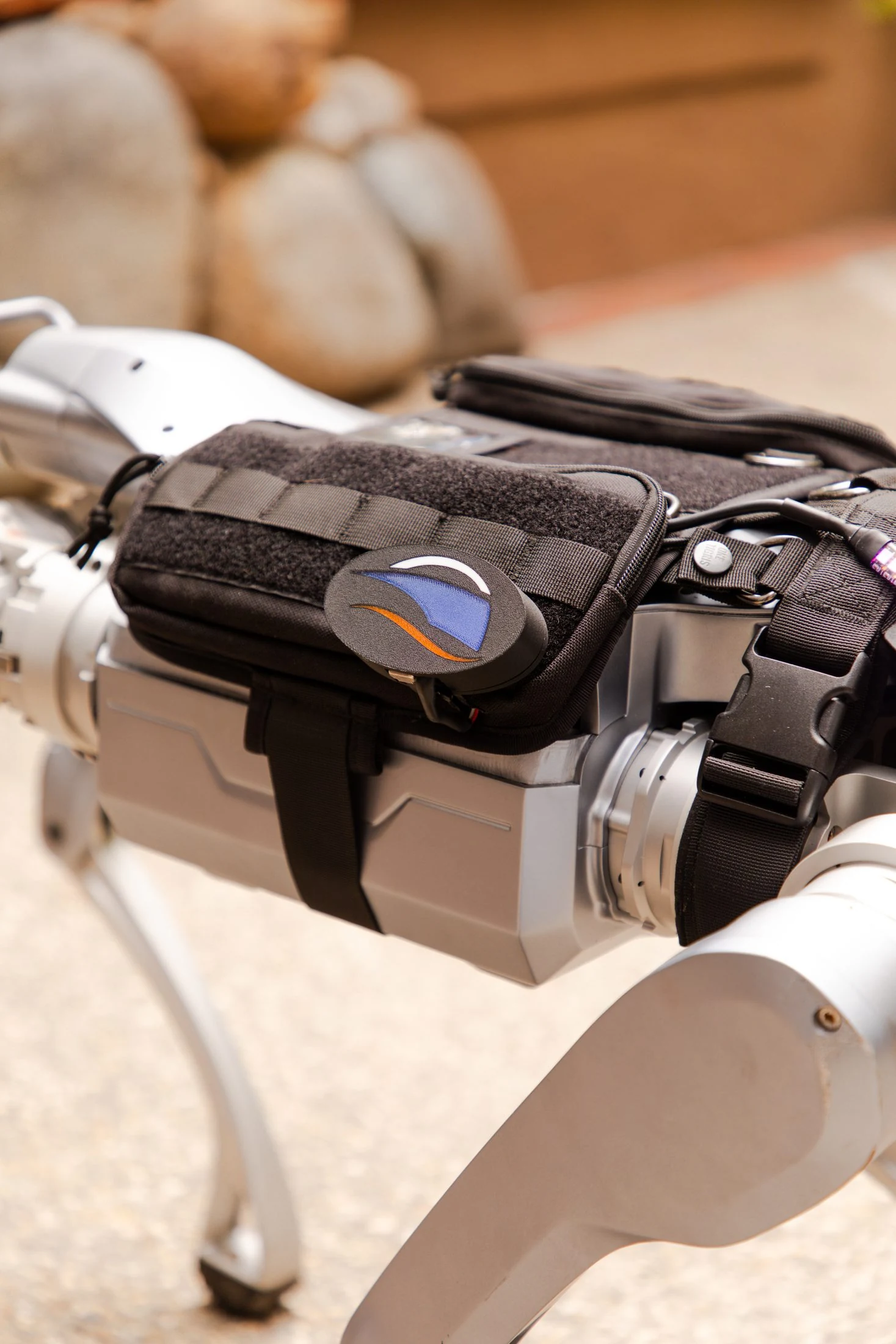
Every major technological innovation has eventually required an interface that made it understandable to people.
Rotary dials and later push-button keypads gave people a simple, intuitive way to connect to others without the need to understand electrical switching systems. Without an easy method to enter a phone number, the technology would have remained difficult for everyday users.
With microwave ovens, a simple control panel turned a complex scientific process into an everyday kitchen appliance.
GPS devices allow people to utilize digital maps with highlighted routes, translating complex satellite calculations into easy-to-follow navigation aids.
There are countless other examples. In each case, without a human-centric interface connecting people with breakthrough technology, acceptance of the innovation into everyday life would have lagged.
Today, robotics is approaching the same inflection point.
The Challenge of Human-Robot Interaction
"As artificial intelligence advances at an extraordinary pace, robots are becoming smarter, more autonomous, and more capable of operating in complex environments, often side-by-side with humans. They can navigate warehouses, collaborate with workers, deliver supplies in hospitals, inspect infrastructure, and perform countless tasks once reserved for people," explains David Skillin (opens in a new tab), a human-centered robotics strategist, category pioneer, and founder of Custom Robotics of La Jolla. "Despite these advances, one critical problem in human-robot interaction remains largely unsolved: the ability of humans to recognize—and robots to signal—intent and operational state when working in shared environments."
Skillin is leading a movement to make autonomous, robotic systems more understandable, more trusted, and more readily adopted by the people who work alongside them. He and his team at Custom Robotics call this The Empathy Layer for Robotics™—a new category focused on making autonomous systems (opens in a new tab) understandable, trustworthy, and human-ready.
"Just as every car eventually required turn signals and brake lights, or every computer or smart device eventually required an easy-to-use interface, we believe every robot will eventually require an empathy layer," says Skillin.
Every Technology Reaches an Interface Moment
History has shown that technology alone does not create widespread adoption. Understanding, trust, and ease-of-use does.
- Early computers were incredibly powerful, but they remained inaccessible to most people until graphical user interfaces simplified how humans interacted with them.
- The internet existed long before web browsers made it easy to navigate.
- Automobiles became dramatically safer once communication standards such as brake lights, turn signals, and traffic signs became universal.
In every case, technology advanced first. Human understanding came later.
Robotics is following the same path.
Intelligence Without Understanding
Today's robots possess remarkable intelligence, yet most still communicate very little about what they are doing, what they intend to do next, or whether it is safe for nearby people to interact with them.
That communication gap is becoming one of the industry's greatest challenges.
According to the International Federation of Robotics (IFR) (opens in a new tab), robotics adoption continues to grow rapidly across manufacturing, logistics, healthcare, and service industries.
Robots now understand:
- Their location
- Their destination
- Their surroundings
- Battery health
- Obstacle detection
- Operational status
- Navigation priorities
They access, process, and store enormous amounts of information every second. However, much of that intelligence remains invisible to others.
Humans standing nearby often have no immediate way of knowing:
- Is the robot stopping?
- Is it turning?
- Has it detected me?
- Is it experiencing a fault?
- Is it safe to approach?
The robot knows, but the human most often does not. This disconnect creates uncertainty, and uncertainty slows trust, which impedes adoption.
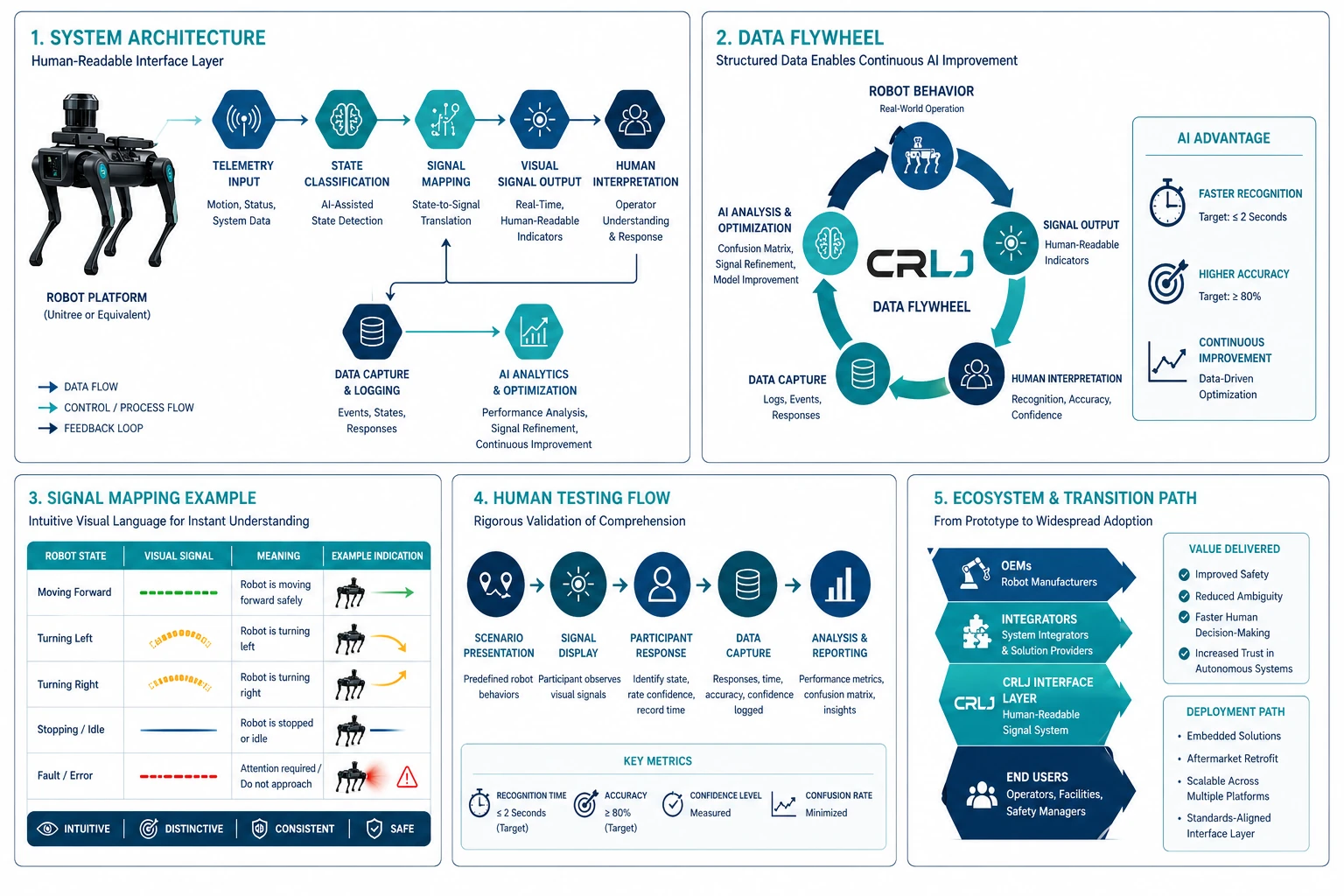
The Empathy Layer for Robotics™
Custom Robotics defines The Empathy Layer for Robotics™ as the communication layer that translates robotic behavior into intuitive, human-readable information. Its purpose is not to control robots. Its purpose is to help humans understand them and their intentions.
Just as an automobile communicates through brake lights, turn signals, and hazard indicators, future robots will need standardized ways of communicating:
- Intent
- Direction
- Status
- Awareness
- Safety conditions
- Operational state
This communication should occur naturally, immediately, and without requiring specialized software or humans to be specially trained.
Why Dashboards Alone Cannot Solve This Problem
Many robotics companies assume dashboards in the hands of supervisors and managers provide sufficient visibility.
Dashboards certainly have value, offering:
- Fleet management
- Diagnostics
- Performance analytics
- Operational reporting
- Event logging
But dashboards are not designed for the people standing next to or working alongside a moving robot. Busy workers cannot constantly monitor software interfaces. They must rely on situational awareness. They need immediate, intuitive understanding. The Empathy Layer for Robotics™ exists to provide that understanding exactly when and where it is needed.
Why This Matters to Every Robotics Company
As robotics continues moving into shared human environments, communication will become a competitive advantage.
Organizations that prioritize human understanding will likely experience:
- Faster workforce acceptance
- Shorter deployment timelines
- Greater operational confidence
- Improved safety perception
- Better long-term adoption
Robotics doesn't need another layer of intelligence. It needs a layer that helps people understand the intelligence that's already there and its intentions in real time.
That layer becomes increasingly valuable as autonomy grows because the smarter robots become, the more important human understanding becomes.
The Next Standard in Robotics
Many technologies eventually reach a point where communication becomes standardized.
- Automobiles standardized signaling.
- Healthcare standardized vital signs.
- Aviation standardized cockpit alerts and warning systems.
Robotics has not yet reached this stage, but as robots become common in workplaces, hospitals, airports, hotels, retail stores, and eventually homes, people will expect consistent, intuitive communication regardless of manufacturer.
Custom Robotics' The Empathy Layer for Robotics™ provides the foundation for that future.
Integrating Security, Transparency, and Independent Validation
As robots become more autonomous, people need more than clear movement‑intent communication. They also need trust in how robots handle information, manage data flows, behave, and operate within shared environments.
This trust consists of three critical elements:
Security & Data Handling
People and organizations need confidence that a robot's data practices are responsible, secure, and independently validated.
Communicating Robot Movement & Intent
Clear, intuitive signaling reduces uncertainty, prevents hesitation, and enables people to work confidently alongside autonomous systems.
Independent Third‑Party Validation
Manufacturers cannot be the sole authority evaluating their own systems. Neutral, third‑party experts must confirm how robots communicate, operate, and manage sensitive information.
These elements form the foundation for evidence‑based trust, which is the foundation of human robot collaboration and at the heart of Custom Robotics' independent validation mark: CRLJ Assured™.
CRLJ Assured™
CRLJ Assured™, currently in development, is intended to independently review and validate a robotics system's behavior, data practices, and status‑ and movement‑intent communication capabilities—with the goal of giving people confidence they can work safely and comfortably alongside them.
This is a critical step in people accepting robots as trustworthy systems—and it aligns directly with a broader adoption progression Custom Robotics calls the "Four Pillars."
Four Pillars: Safety → Clarity → Trust → Adoption
Custom Robotics defines the "Four Pillars" of robotics adoption as:
- Safety: People must feel safe around robots.
- Clarity: Robots must communicate in ways humans immediately understand.
- Trust: Clear communication builds confidence.
- Adoption: Confidence enables organizations to deploy robotics at scale.
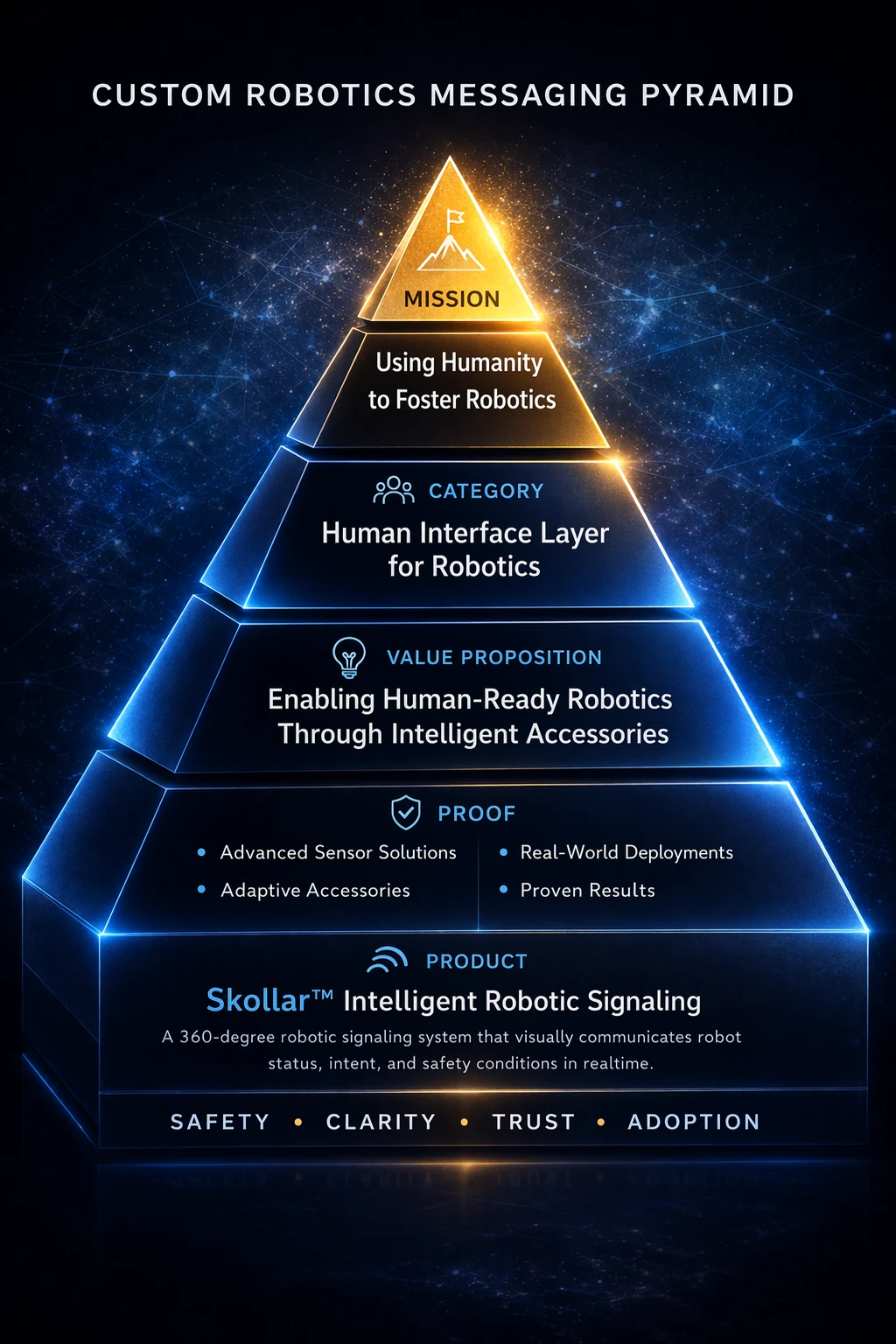
Every successful technology eventually learns that ease of effective communication accelerates adoption. Robotics will be no different.
Looking Ahead: How Custom Robotics Sees It
Artificial intelligence will continue improving. Robots will become faster, more capable, and more autonomous. But intelligence alone will not determine the future of robotics. Human understanding, trust, and confidence in how robots behave, communicate, and handle information will.
The organizations that recognize this shift today will define the next era of automation tomorrow. As autonomous systems enter homes, workplaces, and sensitive environments, people will expect clarity about what robots are doing, how they signal their next move, how they manage data, and whether those practices have been independently validated.
Every successful technology eventually requires an interface built for people. The future of robotics is no different. Every robot will eventually need an empathy layer—supported by clear communication standards, responsible data practices, and independent confirmation that the system is ready for trusted deployment.
"Custom Robotics is defining and refining The Empathy Layer for Robotics™," explains Skillin. "Our goal is to improve safety, clarity, trust, and adoption in shared human-robot environments so that people can comfortably and efficiently interact with various autonomous systems."
Frequently Asked Questions
1. What is The Empathy Layer for Robotics™?
The Empathy Layer for Robotics™ is a human‑centric communication framework developed by Dave Skillin and Custom Robotics of La Jolla that translates a robot's internal status, data‑handling and security posture, and intent into clear, intuitive signals people can understand instantly. It doesn't control robots; it helps humans interpret them.
2. Why isn't artificial intelligence alone enough for safe human‑robot interaction?
AI gives robots the ability to perceive, plan, and act, but it doesn't automatically make those actions understandable to nearby people. Without visible communication, humans must guess what a robot is doing or intending to do.
3. How is this different from the dashboards robotics companies already use?
Dashboards are designed for supervisors, managers, and analysts, not people working beside robots. Workers need real‑time, environmental cues—not software interfaces—to make quick, confident decisions. The empathy layer provides communication at the point of interaction, where it matters most.
4. Will robots from different manufacturers be able to use the same communication standards?
Yes. The empathy layer is designed as a universal framework, similar to how brake lights and turn signals work across all car brands. Standardized communication and best practices allows workers to understand any robot's status or intentions instantly, regardless of who built it.
5. How will an empathy layer improve robotics adoption in workplaces?
When people feel safe, understand robot behavior, and trust the system, adoption accelerates. Organizations benefit through faster onboarding, smoother deployments, fewer misunderstandings, and stronger long‑term acceptance.
6. What is CRLJ Assured™ and how does it improve human‑robot interaction?
CRLJ Assured™ is Custom Robotics' developing independent assurance framework, intended to verify that a robot handles data responsibly, communicates intent clearly, and operates safely. It is designed to offer third‑party confirmation that the system is understandable and predictable.
Time to Make Your Robots Human‑Ready
If you're looking to bridge the divide between robot autonomy and human acceptance, contact Custom Robotics of La Jolla at info@customrobotics.io to arrange a free, no‑strings‑attached consultation.
About David Skillin
David Skillin is Founder and CEO of Custom Robotics of La Jolla and creator of The Empathy Layer for Robotics™ framework. His work focuses on improving safety, clarity, trust, and adoption in shared human-robot environments.
About Custom Robotics of La Jolla
Custom Robotics of La Jolla (CRLJ) is defining The Empathy Layer for Robotics™—helping humans understand, trust, and safely interact with autonomous systems.