
The Economics of Human Understanding™
Why Safety, Clarity, and Trust Will Determine the ROI of Robotics
David Skillin · September 25, 2026
Loading form…
Alternatively, email info@customrobotics.io.
What a Decision-Maker Should Retain.
- The robot that delivers the greatest business value is often the one that employees trust, managers confidently deploy, and organizations can scale without resistance.
- Human uncertainty creates invisible costs — extended training, slower adoption, operational inefficiency, reduced utilization, increased oversight, and reputation risk — that rarely appear in traditional ROI calculations.
- Confidence is an economic asset: when people understand robots, organizations experience faster deployment, higher utilization, and shorter learning curves.
- Four factors consistently influence robotics economics: Safety, Clarity, Trust, and Adoption.
- Successful deployment — not purchase — creates ROI. Organizations realize value only after robotics become accepted parts of everyday operations.
- Organizations that treat human understanding as business infrastructure position themselves for long-term success.
The Full Paper.
The robotics industry has traditionally measured success through various technical and engineering metrics:
- Speed
- Accuracy
- Throughput
- Uptime
- Productivity
- Labor reduction
While these metrics remain important, as robots increasingly work alongside people rather than behind safety barriers, organizations are discovering another factor that significantly influences the return on their robotics investment: human understanding.
The fastest robot is not necessarily the most valuable. The smartest robot is not always the most successful. The robot that delivers the greatest business value is often the one that employees trust, managers confidently deploy, customers comfortably interact with, and organizations can scale without resistance.
This paper introduces the concept of the Economics of Human Understanding—a business framework that demonstrates how Safety, Clarity, Trust, and Adoption directly influence financial performance, operational efficiency, workforce acceptance, and enterprise value.
As robotics enters its next stage of maturity, organizations that prioritize human-centered deployment will likely realize greater returns than those focused solely on technical performance.
1. The Traditional Robotics Business Case
For decades, robotics investments have been justified through measurable operational improvements.
- Labor savings
- Productivity gains
- Reduced defects
- Increased throughput
- Lower operating costs
- Improved consistency
- Faster production
These remain valid financial drivers. However, they tell only part of the story.
Successful robotics deployment depends on something more difficult to quantify: whether people actually embrace the technology.
2. The Hidden Variable in Robotics ROI
Organizations frequently discover that robotics projects encounter unexpected challenges after installation. It's not because the robots fail, but because people hesitate.
- Employees avoiding autonomous equipment
- Managers delaying deployment
- Supervisors increasing oversight
- Customers expressing discomfort
- Longer onboarding periods
- Additional safety meetings
- Increased change management efforts
None of these issues originate from artificial intelligence. They originate from human uncertainty—and uncertainty carries real economic consequences.
3. The Cost of Uncertainty
Human uncertainty creates invisible costs that rarely appear in traditional ROI calculations. Collectively, these factors reduce the speed at which organizations realize financial returns.
These hidden costs include:
- Extended Training—Employees require more time to become comfortable around unfamiliar technology.
- Slower Adoption—Organizations postpone full deployment until confidence increases.
- Operational Inefficiency—Workers may alter workflows to avoid interacting with robots.
- Reduced Utilization—Robots capable of operating continuously may remain underused due to hesitation.
- Increased Management Oversight—Leaders devote additional time monitoring deployments that employees have not fully accepted.
- Reputation Risk—Poor public interactions with robots can damage customer confidence.
4. Human Confidence Is an Economic Asset
Confidence working with robots is often discussed as an emotional outcome. It's also an economic one.
When people understand robots, organizations experience:
- Faster deployment
- Higher utilization
- Shorter learning curves
- Reduced resistance
- Better collaboration
- Improved operational consistency
Confidence accelerates value creation. The sooner people trust robotics, the sooner organizations achieve measurable returns.
5. Beyond Technical Performance
Engineering and technical excellence remain essential, but robotics purchasing decisions increasingly involve multiple stakeholders:
- Operations
- Human Resources
- Safety
- Risk Management
- Finance
- Executive Leadership
- Insurance
- Legal
Each stakeholder evaluates different forms of risk. Human understanding helps reduce many of them simultaneously.
6. The Four Drivers of Human-Centered ROI
Custom Robotics believes four factors consistently influence robotics economics:
Safety
People must feel physically protected. Safe environments reduce incidents, interruptions, and deployment delays.
Clarity
Robots should clearly communicate:
- Intent
- Operational status
- Human awareness
- Hazard conditions
Clear communication reduces uncertainty.
Trust
Confidence increases willingness to collaborate. Trust shortens adoption timelines.
Adoption
Organizations realize value only after robotics become accepted parts of everyday operations. Successful deployment—not purchase—creates ROI.
7. The Empathy Layer for Robotics™
The Empathy Layer for Robotics™ serves as the economic bridge between technical capability and organizational value. Rather than focusing solely on machine intelligence, it improves human understanding of robot behavior and intention through intuitive communication.
Every robot should communicate:
- What it is doing
- What it intends to do
- Whether it is aware of nearby people
- How it is processing and storing data
- Whether it is operating normally
- Whether any hazards exist
These seemingly simple improvements can influence adoption across an entire organization.
8. Introducing the Skollar™ Architecture
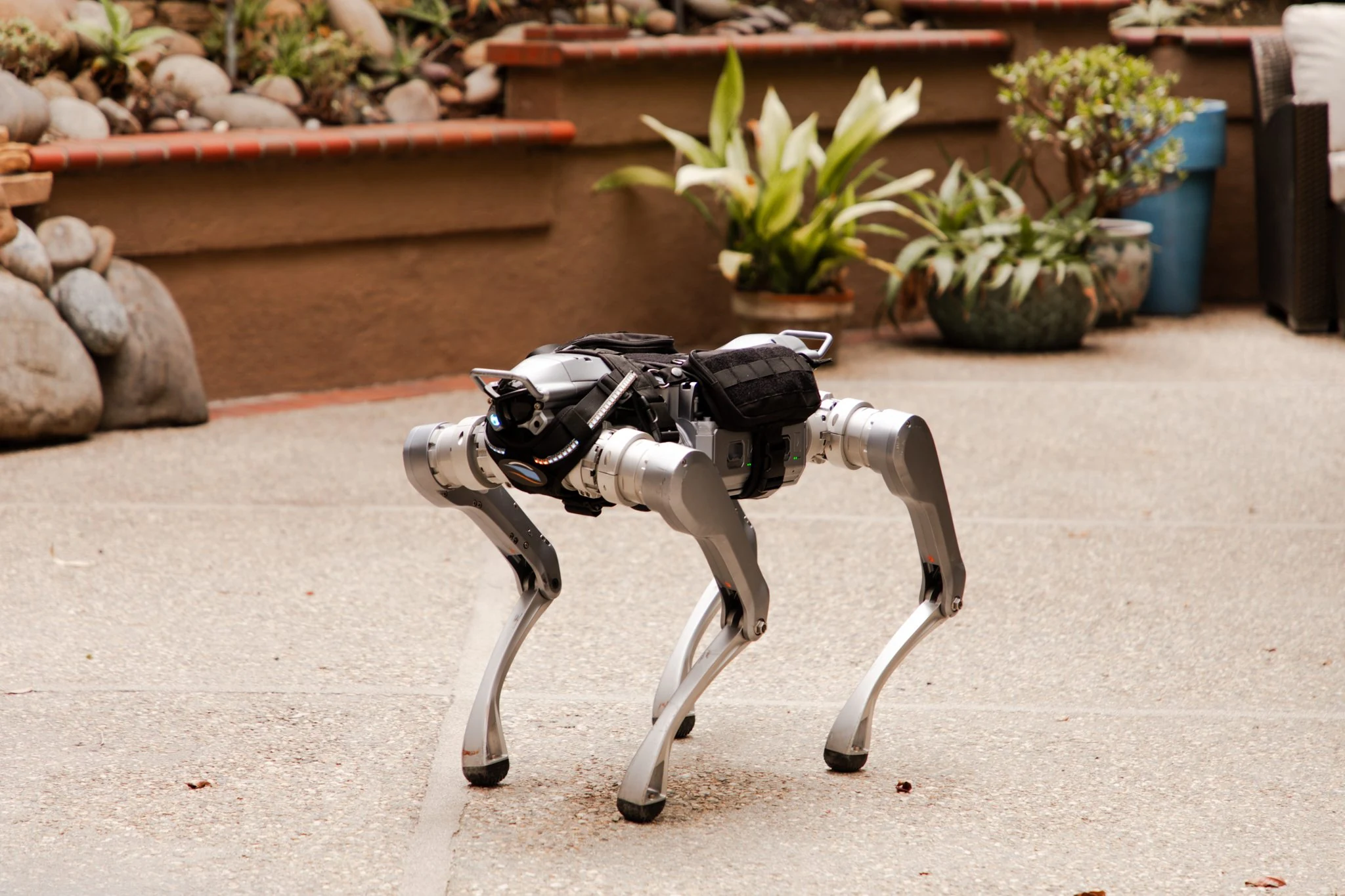
Skollar™ is the first physical implementation of The Empathy Layer for Robotics™, giving robots a persistent, human readable signaling interface that works independently of dashboards or cloud connectivity. It provides a simple, intuitive, and physical way for people to understand machine behavior in real time.
Built on decentralized edge processing, the Skollar™ architecture is designed for low-latency response, deterministic state logic, offline-safe operation, and redundant signaling. Because all interpretation happens locally, the system is designed to continue functioning during communications disruptions, relay interruptions, network degradation, or temporary telemetry loss.
Its human-centered signaling model converts machine states—standby, forward movement, turning, reversing, docking, low power, faults, or emergency conditions—into clear visual patterns that are designed with a target of being interpreted in under two seconds.
9. Executive Decision Making
Executives increasingly ask questions about robotics that extend beyond engineering.
- How quickly will employees accept this technology?
- What organizational resistance should we expect?
- How much training will deployment require?
- How will customers respond?
- How does this affect enterprise risk?
The Empathy Layer for Robotics™ and Skollar™ are designed to help answer each of these questions. Human-centered communication becomes part of executive decision-making.
10. Workforce Productivity
People perform better when uncertainty decreases. Workers who clearly understand robotic behavior spend less time second-guessing machine actions. Instead, they focus on productive work.
Benefits may include:
- Improved workflow coordination
- Fewer interruptions
- Better situational awareness
- Greater confidence
- Higher engagement
The result is stronger human-machine collaboration.
11. Insurance and Risk
Insurance providers increasingly evaluate operational risk across autonomous environments. Future underwriting related to robotics may consider:
- Human interaction standards
- Communication systems
- Situational awareness
- Operational transparency
- Safety governance
Organizations demonstrating mature Human-Ready Robotics practices may eventually benefit from improved risk profiles.
12. Enterprise Value
Investors increasingly evaluate more than technology. They assess adoption rates and scalability.
Organizations capable of deploying robotics efficiently across multiple facilities demonstrate:
- Strong governance
- Workforce readiness
- Operational maturity
- Lower implementation risk
Human-centered deployment becomes an enterprise capability—not simply a robotics feature.
13. The Future Economics of Robotics
As robotics adoption accelerates, competitive advantage will increasingly shift.
Today companies compete through:
- Better AI
- Better sensors
- Better navigation
- Better automation
Tomorrow they are likely to compete through:
- Faster organizational adoption
- Higher employee confidence
- Better customer acceptance
- Lower deployment risk
- Stronger Human-Ready governance
These advantages directly influence financial performance.
14. The Human-Ready Enterprise
Organizations embracing Human-Ready Robotics position themselves for long-term success. Characteristics of these organizations include:
- Executive commitment to human-centered deployment
- Standardized communication frameworks
- Workforce engagement
- Predictable robot behavior
- Clear operational transparency
- Independent validation
- Continuous improvement
These organizations treat human understanding as business infrastructure.
Conclusion
The economics of robotics are evolving. Return on investment is no longer determined solely by technical performance. ROI is increasingly influenced by how confidently people work alongside autonomous systems.
Organizations that reduce uncertainty accelerate adoption. Organizations that accelerate adoption realize value sooner. Organizations that realize value sooner outperform competitors.
The Empathy Layer for Robotics™ provides the communication framework that transforms robotics from impressive technology into trusted enterprise infrastructure.
The future belongs not simply to the smartest robots. It belongs to the organizations that best understand the people working beside them.