Trust Must Be Designed Into Robotics.
As autonomous systems enter shared human environments, trust depends on more than whether the robot can perform its task.
People need to understand it. Organizations need confidence in how information is handled. Critical claims need independent evidence. CRLJ is developing a trust architecture that connects those requirements.
Human Trust and Organizational Trust
A robot can be physically capable while still creating uncertainty for the people beside it — and it can move safely while raising separate questions about cameras, microphones, networks, and data.
Can people understand what the robot is doing?
- Is it idle or active?
- Where is it going next?
- Is it turning, docking, or reversing?
- Has it encountered a fault?
Can organizations trust what the system does with information?
- What does it sense and collect?
- Where is information processed and stored?
- What is transmitted, and to where?
- Who can access it?
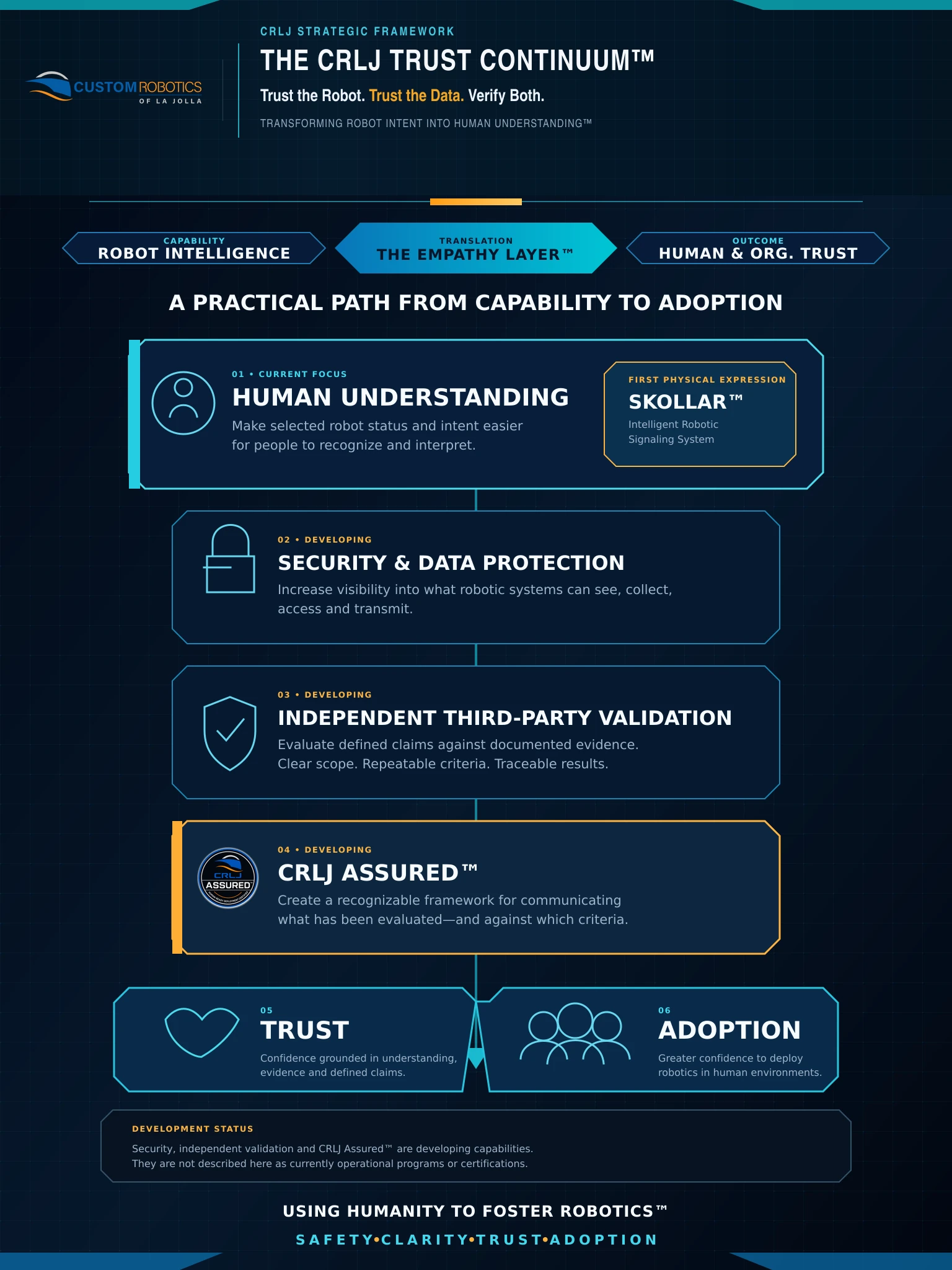
Four Connected Areas
These are not isolated services. Each area supports the next, and current focus is distinguished from developing capability.
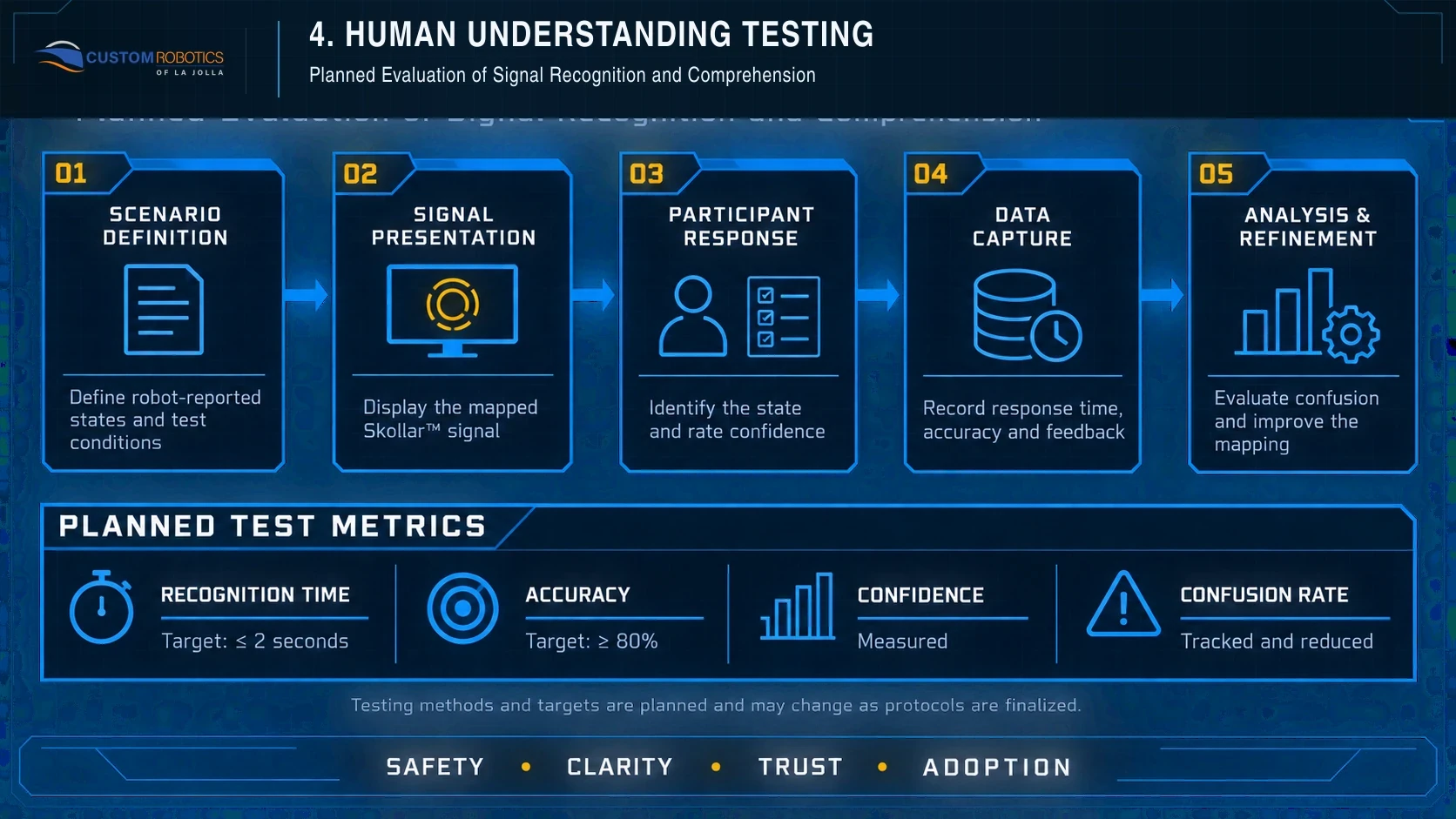
Human Understanding
Robot state and intent made understandable to the people nearby, at the point of interaction.
Security & Data Protection
Visibility and accountability around sensing, processing, transmission, storage, and access.
Independent Third-Party Validation
Critical claims evaluated against defined requirements and documented evidence.
CRLJ Assured™
A developing, recognizable trust designation based on defined CRLJ requirements and stated scope.
A Connected Trust Architecture
Understanding, security, independent evaluation, and assurance work together. Trust and adoption are the outcomes of the architecture, not separate products.
- 01Understanding
- 02Security
- 03Independent Third-Party Validation
- 04CRLJ Assured™
- 05Trust
- 06Adoption
Security Begins With Visibility.
Robotics security is not limited to whether a device can be compromised. It also includes data flows, access, configuration, dependencies, updates, and the operating conditions surrounding the system.
- 01Robot SensorsCameras, audio, mapping, and environmental sensing
- 02Local ProcessingOn-device interpretation of captured information
- 03NetworkWhat leaves the local environment
- 04Storage & AccessWhere information rests and who can reach it
- What is collected?
- Where is it processed?
- What leaves the robot?
- Where does it go?
- Who can access it?
- How is it protected?
- Has the claim been independently evaluated?
The Company Making the Claim Should Not Be the Only Source of Assurance.
As robots enter healthcare, government, infrastructure, and other sensitive environments, self-attestation alone becomes harder to rely on. Independent evaluation adds separation between the claim and the review of the evidence behind it.
CRLJ's validation framework is in development. No formal certification regime is presented as complete.
- 01Manufacturer ClaimWhat the platform states about itself
- 02Independent EvaluationDefined requirements applied consistently
- 03EvidenceDocumented results rather than assertions
- 04Trusted DeploymentAn informed decision to operate around people
Safety → Clarity → Trust → Adoption
Safety
Defined safeguards and responsible operating conditions.
Clarity
Human-readable communication of status, behavior, and intent.
Trust
Systems that are understandable outside and accountable inside.
Adoption
Confidence to accept robotics into shared environments.