
Trust Is the Missing Metric in Robotics
Why the Future of Automation Depends on More Than Performance
According to Custom Robotics of La Jolla, trust—not performance—is the real barrier to automation. Closing the empathy gap in robotics is essential for helping people understand, trust, and confidently work alongside autonomous systems.
David Skillin · June 10, 2026
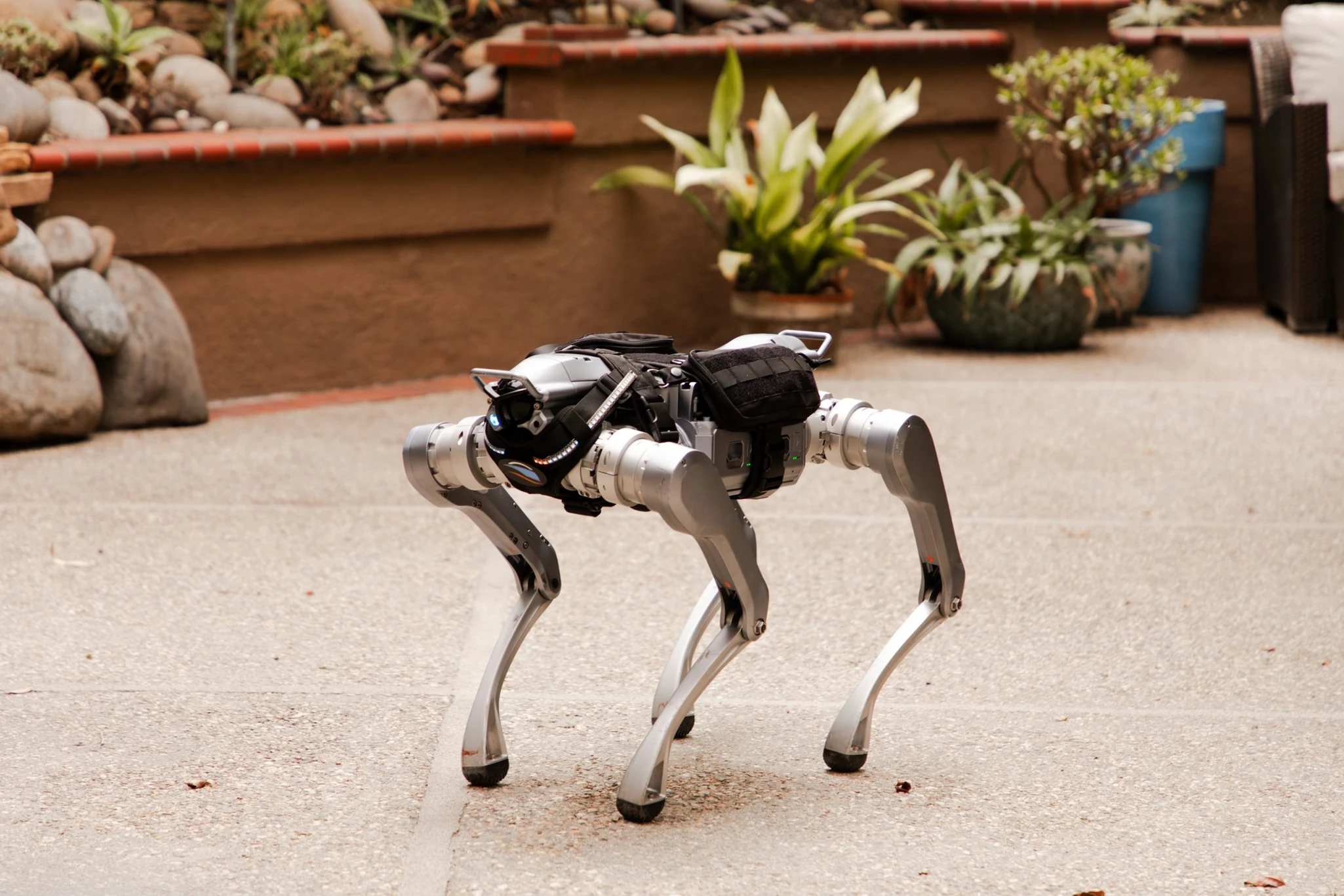
When organizations evaluate robotics systems, they typically focus on measurable performance indicators. They examine:
- Speed
- Throughput
- Accuracy
- Uptime
- Efficiency
- Return on Investment (ROI)
- Cycle Times
- Labor Savings
These metrics are often the primary drivers behind automation investments. But there is another metric that rarely appears on implementation scorecards, yet may have a greater influence on long-term success than any of the indicators above.
That metric is trust.
Custom Robotics of La Jolla (CRLJ) believes trust is one of the most overlooked factors in robotics adoption. As robots move from isolated environments into shared human spaces, more and more organizations are discovering that technical performance alone does not guarantee successful deployment. People must also trust the machines around them. It's what drives adoption because, without trust, even the most advanced robotics systems can struggle to achieve their full potential.
The Trust Gap in Robotics
The robotics industry has made extraordinary progress in recent years.
- Autonomous mobile robots navigate warehouses with precision.
- Collaborative robots assist manufacturing teams.
- AI-powered systems make increasingly sophisticated decisions.
According to the International Federation of Robotics (opens in a new tab) (IFR), global robotics adoption continues to accelerate across virtually every major industry.
Despite these advancements, though, organizations continue to encounter a common challenge: their workers are hesitant around robots.
Why? Because people trust what they understand; they question what they do not. And most robots communicate very little about their behavior, intent, or operational status.
As a result, people are expected to trust machines they cannot easily interpret.
This creates what we call the Trust Gap.
Humans Need Visible Signals
People constantly assess their environment by interpreting signals.
For example, drivers rely on:
- Brake lights
- Turn signals
- Traffic lights
- Road signs
Pilots rely on:
- Instrument panels
- Warning systems
- Flight indicators
Healthcare professionals rely on:
- Vital signs
- Alarms
- Visual monitoring systems
These communication tools exist because human beings need situational awareness. Simply put, we are more comfortable when we understand what is happening around us.
The same principle applies to working with robotic systems.
People want to know:
- What is the robot doing?
- What will it do next?
- Has it detected me?
- Is it operating normally?
- Is it safe to approach?
These are not engineering questions. These are human questions.
Technical Safety vs Human Trust
One of the biggest misconceptions in robotics is that technical safety automatically creates trust.
Granted, robots may satisfy every safety requirement, pass every engineering review, and perform flawlessly during testing. Yet workers might still feel uncomfortable interacting with it.
Why?
People evaluate risk differently than machines. Humans rely heavily on perception, familiarity, and understanding. So when machine behavior feels unclear, people become cautious.
This often manifests as:
- Hesitation
- Resistance
- The need for increased supervision
- Delayed adoption
- Operational friction
The challenge is not whether the robot is safe. The challenge is whether humans believe it is safe.
Why Dashboards Don't Build Trust
Many organizations assume dashboards solve visibility problems. Dashboards certainly provide valuable information, offering:
- Operational metrics
- Fleet management
- Diagnostics
- Performance reporting
But dashboards do not build trust. Trust is built when humans and robots interact successfully. Workers do not spend their day watching dashboards. They work in warehouses, manufacturing facilities, distribution centers, hospitals, airports, retail environments.
People need answers in real time, not after opening an application, reviewing a report, or calling the control room.
Trust as a Business Metric
Most organizations measure productivity. Few measure trust. That may soon change. As robotics deployments scale, trust may become one of the most important leading indicators of success.
Consider the impact trust has on:
- Deployment Speed: Workers who trust automation systems are more likely to support implementation efforts.
- Workforce Adoption: Trust reduces resistance and increases acceptance.
- Operational Efficiency: Confident workers interact more effectively with robotic systems.
- Safety Culture: Understanding reduces uncertainty and improves awareness.
- Long-Term Scalability: Organizations scale technologies that people are comfortable using.
The Missing Layer
At CRLJ, we believe trust is created through communication. That belief has led us to define what we call The Empathy Layer for Robotics™. This layer serves as the bridge between machine intelligence and human understanding. Its purpose is to translate robotic behavior into human-readable communication.
This includes communicating:
- Status
- Intent
- Direction
- Safety conditions
- Operational awareness
When people understand robots, trust grows—and when trust grows, adoption accelerates.
"Trust isn't created by making robots smarter," Skillin says. "Trust is created by helping humans understand what those robots are doing."
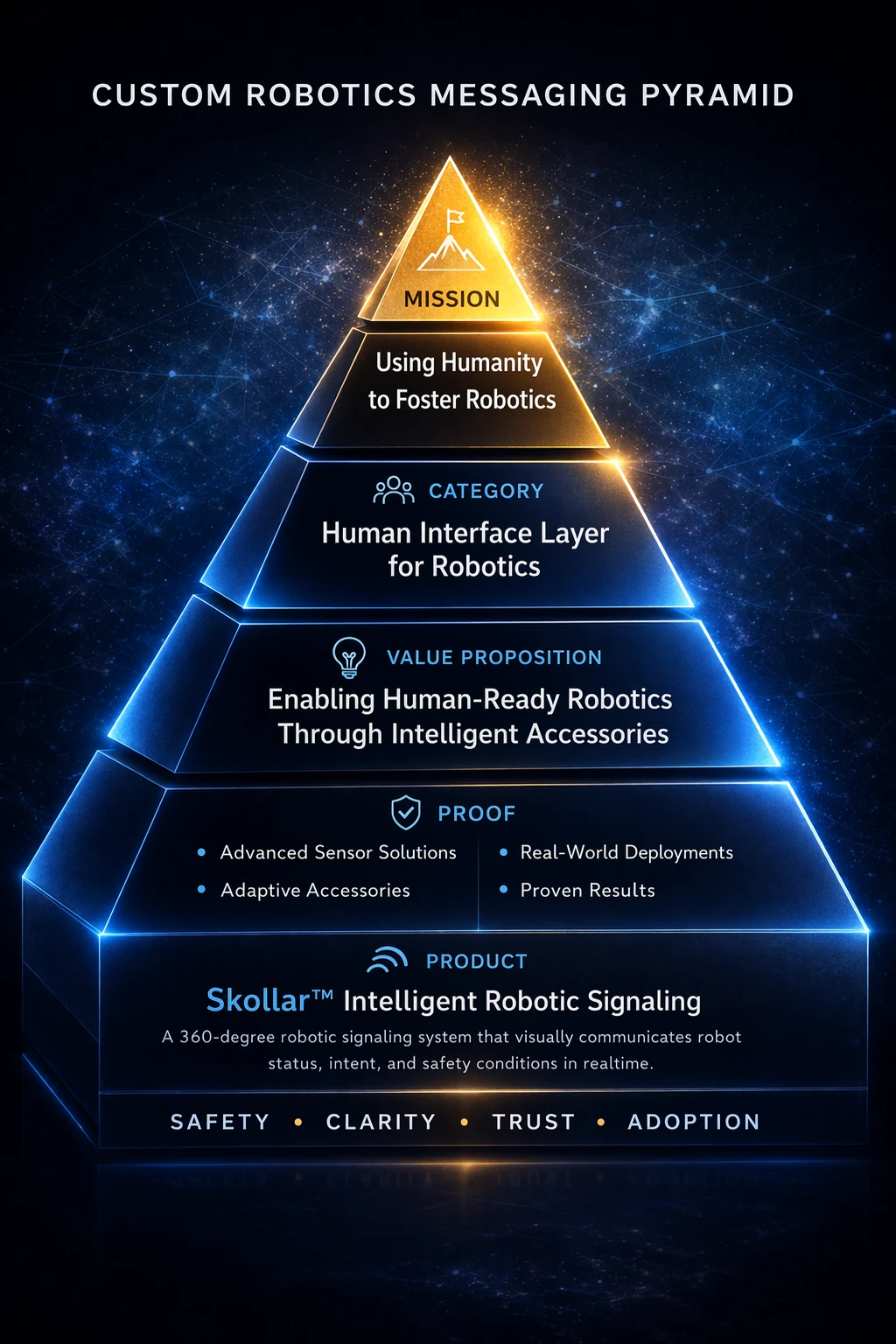
Safety → Clarity → Trust → Adoption
At CRLJ, we view robotics adoption through four interconnected outcomes:
Safety: People must feel physically safe.
Clarity: People must understand what the robot is doing.
Trust: Understanding creates confidence.
Adoption: Confidence enables implementation and scale.
This progression creates a positive cycle.
Safety enables clarity, clarity builds trust, trust accelerates adoption, and adoption expands the robotics ecosystem.
Organizations that prioritize transparency, communication, and human-centered design will deploy faster, scale more effectively, and achieve stronger workforce acceptance.
Time to Make Your Robots Human‑Ready
If you're looking to bridge the divide between robot autonomy and human acceptance, contact Custom Robotics of La Jolla at info@customrobotics.io to arrange a free, no‑strings‑attached consult.
About David Skillin
David Skillin is Founder and CEO of Custom Robotics of La Jolla and creator of The Empathy Layer for Robotics™ framework. His work focuses on improving safety, clarity, trust, and adoption in shared human-robot environments.
About Custom Robotics of La Jolla
Custom Robotics of La Jolla (CRLJ) is defining The Empathy Layer for Robotics™—helping humans understand, trust, and safely interact with autonomous systems.