
Operational Safety and Intent Broadcasting in Autonomous Systems
Establishing The Empathy Layer for Robotics™
David Skillin · June 10, 2026
Loading form…
Alternatively, email info@customrobotics.io.
What a Decision-Maker Should Retain.
- Humans frequently cannot distinguish idle, processing, fault or emergency conditions — CRLJ defines this as State Opacity.
- Dashboards provide information, not visibility; intent communication must occur inside a worker's natural field of awareness.
- The Empathy Layer for Robotics™ is platform-agnostic and exists independently of robot hardware, AI systems and fleet software.
- Proposed validation targets human understanding: ≤ 2-second recognition speed and ≥ 80% interpretation accuracy.
- Potential alignment areas include ISO 13482, ANSI/RIA robotics standards and OSHA workplace safety initiatives.
The Full Paper.
Autonomous robotics is entering a period of unprecedented deployment across industrial, logistics, healthcare, municipal, and commercial environments. Advances in artificial intelligence, mobility systems, sensor fusion, and machine autonomy have dramatically expanded the capabilities of robots operating in shared human environments.
Despite these technological advances, one critical challenge remains unresolved: humans often cannot instantly understand what a robot is doing, what it intends to do next, or whether it is safe to approach. This communication gap creates operational friction, deployment delays, worker hesitation, increased safety concerns, and resistance to adoption.
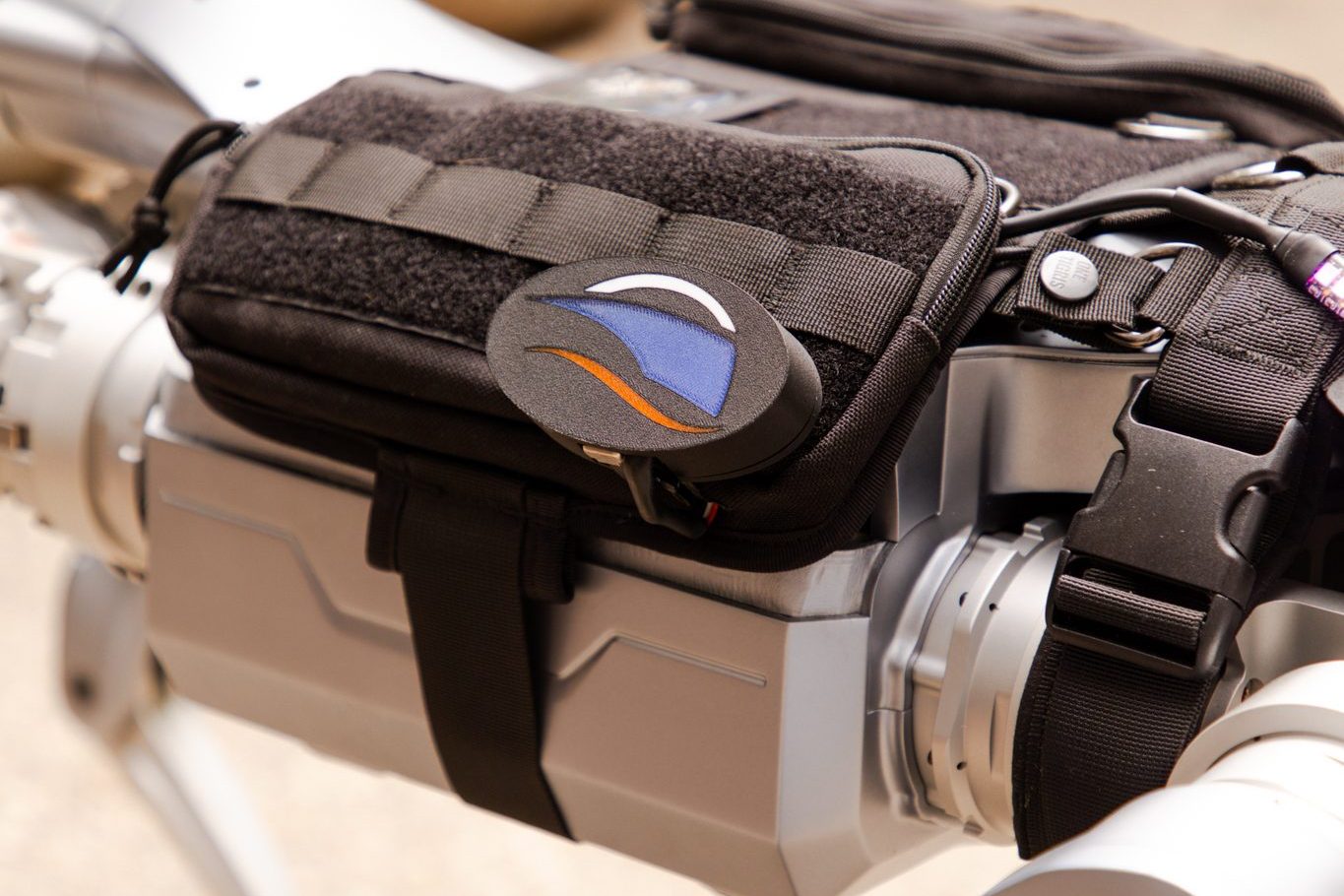
Custom Robotics of La Jolla defines this challenge as the absence of an Empathy Layer for Robotics™. The Empathy Layer for Robotics™ is the missing communication framework that enables autonomous systems to communicate operational state, intent, and safety conditions in ways humans can instantly understand. Skollar™ represents the first physical implementation of this category.
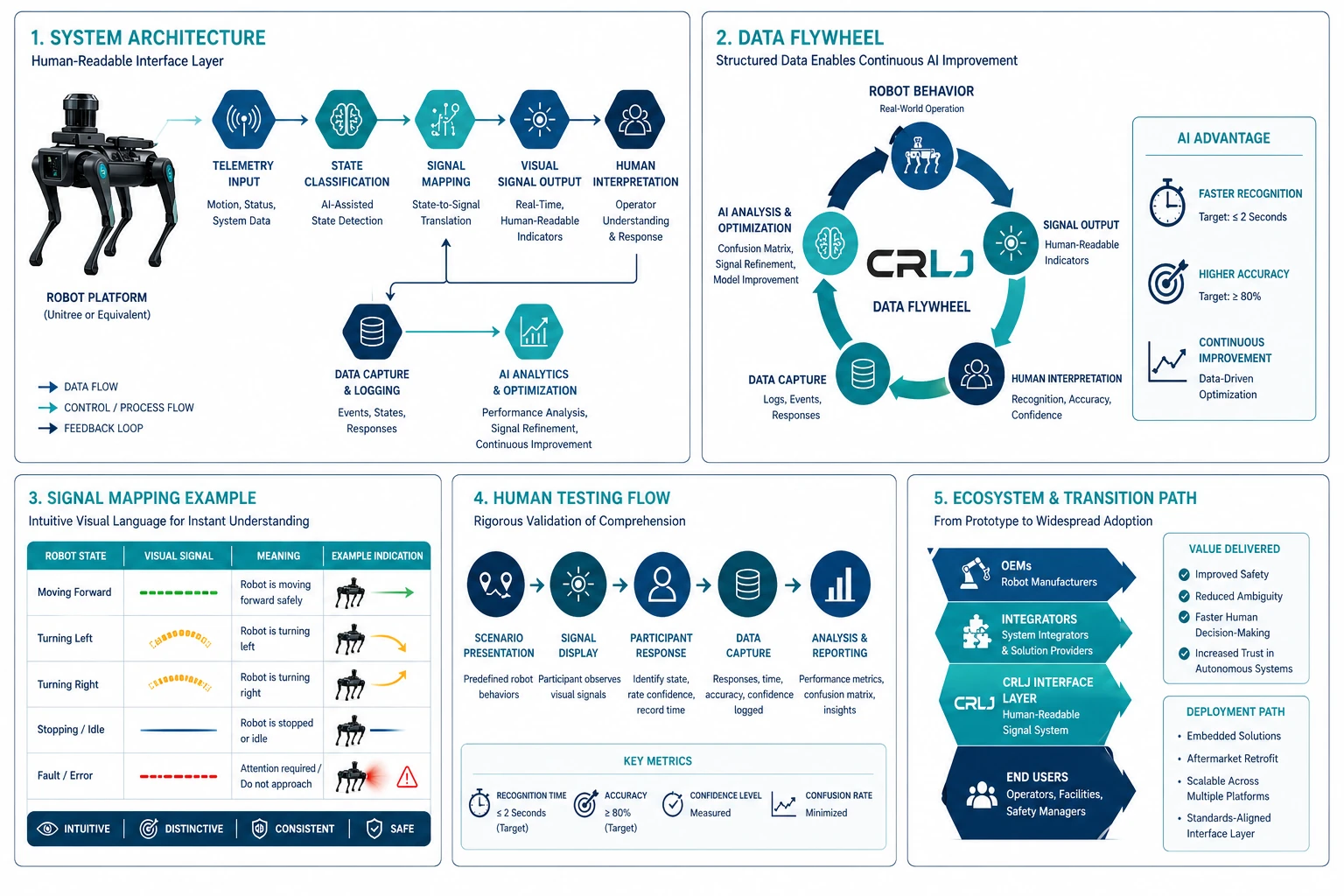
By translating machine telemetry into deterministic, human-readable visual signals, Skollar™ is designed to help bridge the gap between machine intelligence and human instinct.
This paper examines:
- The growing safety and adoption challenges surrounding robotics deployment
- The concept of state opacity in autonomous systems
- Why traditional dashboards fail in real-world environments
- The emergence of The Empathy Layer for Robotics™ category
- The role of human-readable signaling systems
- Validation methodologies for intent communication
- Alignment with emerging safety and compliance frameworks
- The economic impact of improved human-machine understanding
The central thesis is simple: robots do not need to become more intelligent to become safer. They need to become more understandable.
1. The Adoption Challenge Facing Robotics
1.1 The Growth of Autonomous Systems
Robotics adoption continues to accelerate across numerous sectors:
- Warehousing
- Manufacturing
- Logistics
- Healthcare
- Municipal operations
- Security
- Hospitality
- Public infrastructure
Driving forces include:
- Labor shortages
- Rising operational costs
- AI-driven optimization
- E-commerce growth
- Workplace safety demands
- Increasing expectations for productivity
As organizations deploy more autonomous systems, robots are increasingly operating within close physical proximity to human workers. This transition introduces a new challenge: humans must understand autonomous systems quickly enough to work alongside them safely.
1.2 State Opacity
Current robotic systems process large volumes of information internally. However, much of this information remains invisible to nearby humans.
A robot standing motionless could be:
- Idle
- Processing
- Preparing movement
- Experiencing a fault
- Awaiting instructions
- Entering an emergency state
Humans frequently cannot distinguish between these conditions. CRLJ defines this lack of visibility as “State Opacity.”
State Opacity increases:
- Perceived risk
- Worker hesitation
- Training requirements
- Deployment resistance
- Operational uncertainty
The challenge is not technological capability. The challenge is communication.
2. Why Existing Interfaces Fail
2.1 Dashboard Dependency
Many robotics systems rely upon:
- Tablets
- Mobile applications
- Fleet management dashboards
- Diagnostic software
- Operator consoles
These tools provide information, but they do not provide visibility.
Humans operating in dynamic environments rarely monitor dashboards continuously.
Workers are focused on:
- Tasks
- Equipment
- Co-workers
- Environmental hazards
- Deadlines
Intent communication must occur within a worker’s natural field of awareness.
2.2 Human Factors Reality
Humans instinctively understand systems such as:
- Traffic lights
- Brake lights
- Turn signals
- Construction strobes
- Emergency vehicle lighting
These systems succeed because they:
- Require minimal training
- Operate visually
- Communicate instantly
- Function under stress
- Remain visible at distance
Robotics currently lacks such an equivalent communication layer.
3. Defining The Empathy Layer for Robotics™
CRLJ defines The Empathy Layer for Robotics™ as "A platform-agnostic communication framework that translates robotic behavior, operational state, and intent into instantly understandable human-readable signals."
This layer exists independently from:
- Robot hardware
- AI systems
- Fleet software
- Navigation platforms
It serves one purpose: human understanding.
Just as every vehicle eventually adopted standardized signaling systems, robotics may require a similar communication layer to support widespread adoption.
4. Skollar™: The First Physical Expression of the Category
Skollar™ functions as:
- A visual telemetry layer
- An intent communication system
- A human-readable signaling architecture
- A platform-agnostic robotics accessory
The system translates machine telemetry into visible communication states that can be interpreted instinctively by nearby humans.
Examples include:
- Forward movement
- Turning
- Reversing
- Standby
- Fault condition
- Emergency stop
- Docking mode
The objective is immediate comprehension without requiring specialized training.
5. Design Principles for Human-Readable Robotics
Principle 1: Visibility
- Signals must be observable from multiple directions and distances.
Principle 2: Consistency
- States must maintain predictable communication patterns.
Principle 3: Determinism
- A given signal should always represent the same operational condition.
Principle 4: Low Cognitive Load
- Humans should not need to interpret data.
- They should recognize meaning instantly.
Principle 5: Platform Independence
- The communication framework should operate across robot types and manufacturers.
6. Validation Methodology
A critical component of The Empathy Layer for Robotics™ framework is measurable validation. CRLJ proposes testing focused on human understanding rather than robot performance.
Primary measurements include:
Recognition Speed
- How quickly can a participant identify robot state?
- Target: ≤ 2 seconds
Interpretation Accuracy
- Can participants correctly interpret intent?
- Target: ≥ 80% accuracy
Confidence Scoring
- Do workers feel more comfortable operating near the robot?
Operational Hesitation
- Do visible signals reduce uncertainty-driven delays?
7. Operational Use Cases
Example: Warehouse Environment
Worker approaches an AMR at an aisle intersection. Visible directional signaling immediately communicates:
- Movement direction
- Stop condition
- Turning intent
As a result, the worker can make faster and more confident decisions.
Example: Manufacturing Environment
Collaborative robot enters a fault condition. Visual signaling immediately alerts operators without requiring dashboard access.
- Response time may improve.
- Downtime may decrease.
Example: Healthcare Environment
Autonomous delivery robot transitions from active transport mode into standby mode.
- Staff can instantly determine whether interaction is appropriate.
- Trust may increase.
8. Standards and Compliance Considerations
As autonomous systems become more common, regulators and insurers are expected to place increasing emphasis on visibility and intent communication.
Potential alignment areas include:
- ISO 13482
- ANSI/RIA robotics standards
- OSHA workplace safety initiatives
- Human-Robot Interaction frameworks
- Future autonomy transparency guidelines
CRLJ believes communication visibility will become an increasingly important component of robotics safety programs.
9. Economic Impact
Improved human understanding can create measurable operational value.
Potential benefits include:
- Faster deployment approvals
- Improved worker acceptance
- Reduced training burden
- Lower perceived risk
- Reduced operational ambiguity
- Improved customer confidence
- Faster robotics adoption
For OEMs and integrators, improved communication may reduce deployment friction and improve project success rates.
10. Strategic Implications
The robotics industry has spent decades improving machine intelligence. The next stage of adoption will require equal attention toward human understanding. Organizations that successfully bridge this communication gap may gain significant advantages in:
- Safety
- Adoption
- Workforce acceptance
- Operational scalability
- Market differentiation
The Empathy Layer for Robotics™ is not a replacement for robotics intelligence. It is the communication infrastructure that allows humans to benefit from it.
Conclusion
Autonomous systems are becoming increasingly capable. However, capability alone does not guarantee adoption.
Humans must be able to understand what robots are doing, what they intend to do next, and whether it is safe to engage. The Empathy Layer for Robotics™ provides a framework for making machine behavior visible, understandable, and actionable. Skollar™ represents the first physical implementation of that framework.
As robotics continues to scale across industries, human-readable communication may become as essential to autonomous systems as turn signals became to automobiles.
The future of robotics is not simply autonomous. It is human-ready.